What is happening this week: 1.4 billion people look at Spain
As you read this, the Pope Leo XIV walks on Spanish soil for the first time. It arrived in Madrid on June 6, 2026 at the Adolfo Suárez Barajas airport. The Kings and the President of the Government received him. He passed by the Royal Palace. Tomorrow fills the Santiago Bernabéu with 80,000 people. On Tuesday he will celebrate a solemn mass at the Holy Family from Barcelona. Then he flies to Gran Canaria to talk to migrants in La Laguna. June 12th leaves.
It is the first papal visit to Spain since 2011, when Benedict XVI came for World Youth Day. Fifteen years of papal silence on Spanish soil. A pause that is not a coincidence — and that says something about the place of the Church in this country, about the place of Spain in Vatican geopolitics, and about the profound change that European religiosity has experienced in recent years.
This is not your typical Catholic press release. It is an attempt to think about the visit seriously — who this Pope is, what he represents, what he says and what he does not dare to say, and how it connects with questions much bigger than the visit itself: what is religion today? what is spirituality? Do we need an institution to have interior life? Where does a religion end and where does a sect begin? What if the most sacred thing we have is not in any church but on the table where you dine?
"There is a question that the ecclesiastical institution can no longer avoid: if more than 60% of baptized Spaniards do not practice, who is failing — the faithful to the faith, or the institution to the faithful?"
Your Artist's Path · June 2026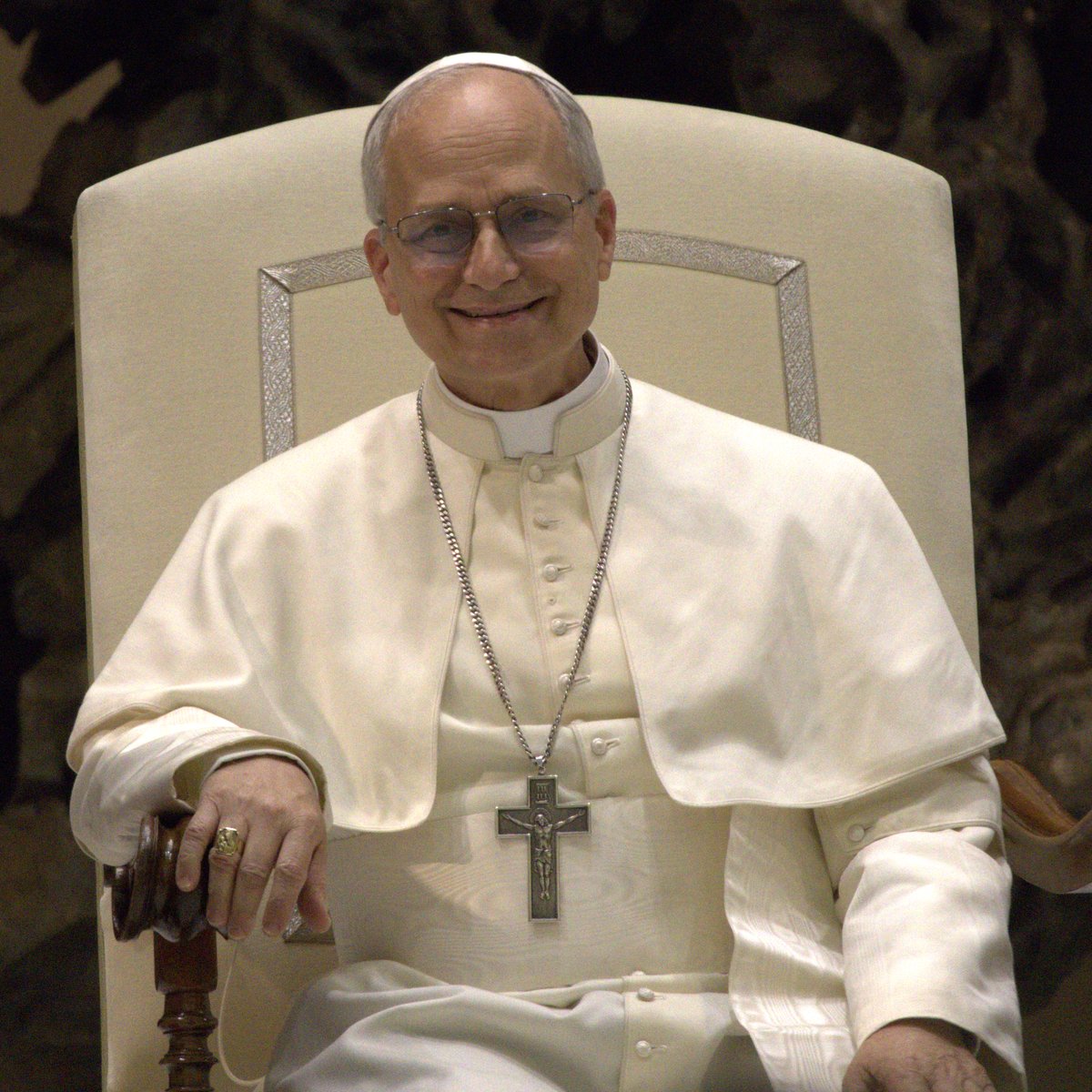
Robert Francis Prevost, Pope Leo XIV. Born in Chicago in 1955. Augustinian. Missionary in Peru for decades. First American Pope in history. He arrives in Spain with a message that combines Latin American roots, European training and a look at the global south.Photo: Edgar Beltran / The Pillar · License CC BY-SA 4.0 · Via Wikimedia Commons
Who really is Robert Prevost, the Pope who arrived from the Bronx via Peru?
On May 8, 2025, after two days of conclave and four votes, the chimney of the Sistine Chapel produced white smoke. The cardinal protodeacon stepped out onto the balcony of St. Peter's and uttered two words that changed history: Robertum Franciscum. Robert Francis Prevost, an American Augustinian born in Chicago in 1955, became the first Pope in history born in the United States. He took the name of Leo XIV.
His career is more interesting than his nationality. Son of a Catholic family on the South Side of Chicago - a working-class, multi-ethnic, historically African-American neighborhood. He entered the Order of Saint Augustine in 1977 and was ordained a priest in 1982. But his real life was not in the United States: he spent most of his adult career as a missionary in Peru, in the diocese of Chiclayo. He learned Quechua, worked with the indigenous population, and lived theology from the grassroots, not from the desk.
From missionary in Peru to the Vatican
In 2001 he was elected prior general of the Augustinians — the highest position in his order worldwide. He served two six-year terms until 2013. He then returned to Peru as bishop of Chiclayo, where he remained for nine years. In 2023, Pope Francis brought him to Rome as prefect of the Dicastery for Bishops — the body that selects and proposes bishops around the world. Position of enormous royal power: whoever decides who is bishop in each country, decides the local face of the Church for decades.
Three facts that count more than the headlines:
- He has dual nationality — American and Peruvian. More Latin American than many suspect.
- He is Augustinian, not Jesuit or Franciscan. This matters: Augustinians emphasize interiority (St. Augustine's "inner city"), the search for God within, not without.
- Your Spanish is better than your Italian. His first audiences in San Pedro were in Spanish for the South American pilgrims before in Italian for the Romans.
Why Leo XIV? The name as a program
Every papal name is a political statement. Leo XIII, his 19th century namesake, published the encyclical in 1891 Rerum Novarum —founding text of Catholic social doctrine that defended the rights of workers in the midst of the industrial revolution. It was a direct criticism of deregulated capitalism and, at the same time, a criticism of Marxism. A third Catholic way.
That a pope choose that name in 2025 — in the midst of the disruption of artificial intelligence, with exploited inequality, mass migrations and the climate crisis — is a program declaration. Leo XIV has explicitly said that the current technological revolution is comparable to the industrial revolution of the 19th century and requires a new social doctrine. Whoever expected him as a comfortable, conservative, "American" Pope, is reading it wrong.
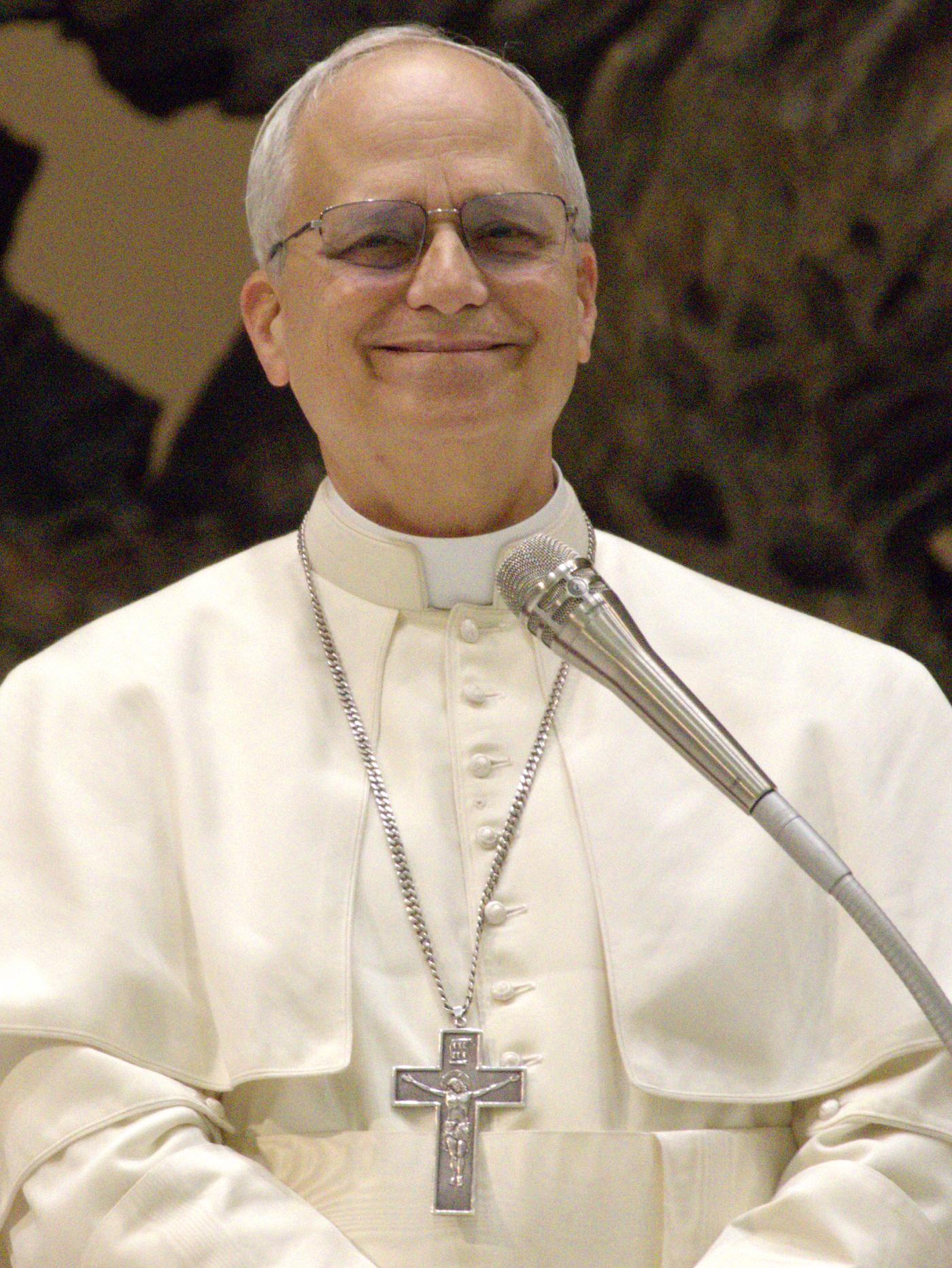
Pope Leo XIV during his audience with media representatives at the Vatican, on May 12, 2025, four days after his election. His career out of the media spotlight contrasts with the exposure he now has to assume.Photo: Edgar Beltran / The Pillar · License CC BY-SA 4.0 · Via Wikimedia Commons
The actual program of the visit: Madrid, Barcelona, Canary Islands
The official program published by the Holy See has this structure:
Madrid · June 6 to 9
- Saturday 6: arrival in Barajas, royal reception, welcome ceremony at the Royal Palace.
- Sunday 7: mass mass at the Santiago Bernabéu stadium. 80,000 confirmed faithful. The latent political question: how many attendees are practicing Catholics, how many are cultural sympathizers, how many come out of historical curiosity?
- Monday 8: meetings with the Spanish episcopal body, with representatives of social organizations and with young people.
- Tuesday 9 tomorrow: transfer to Barcelona.
Barcelona · June 9 to 10
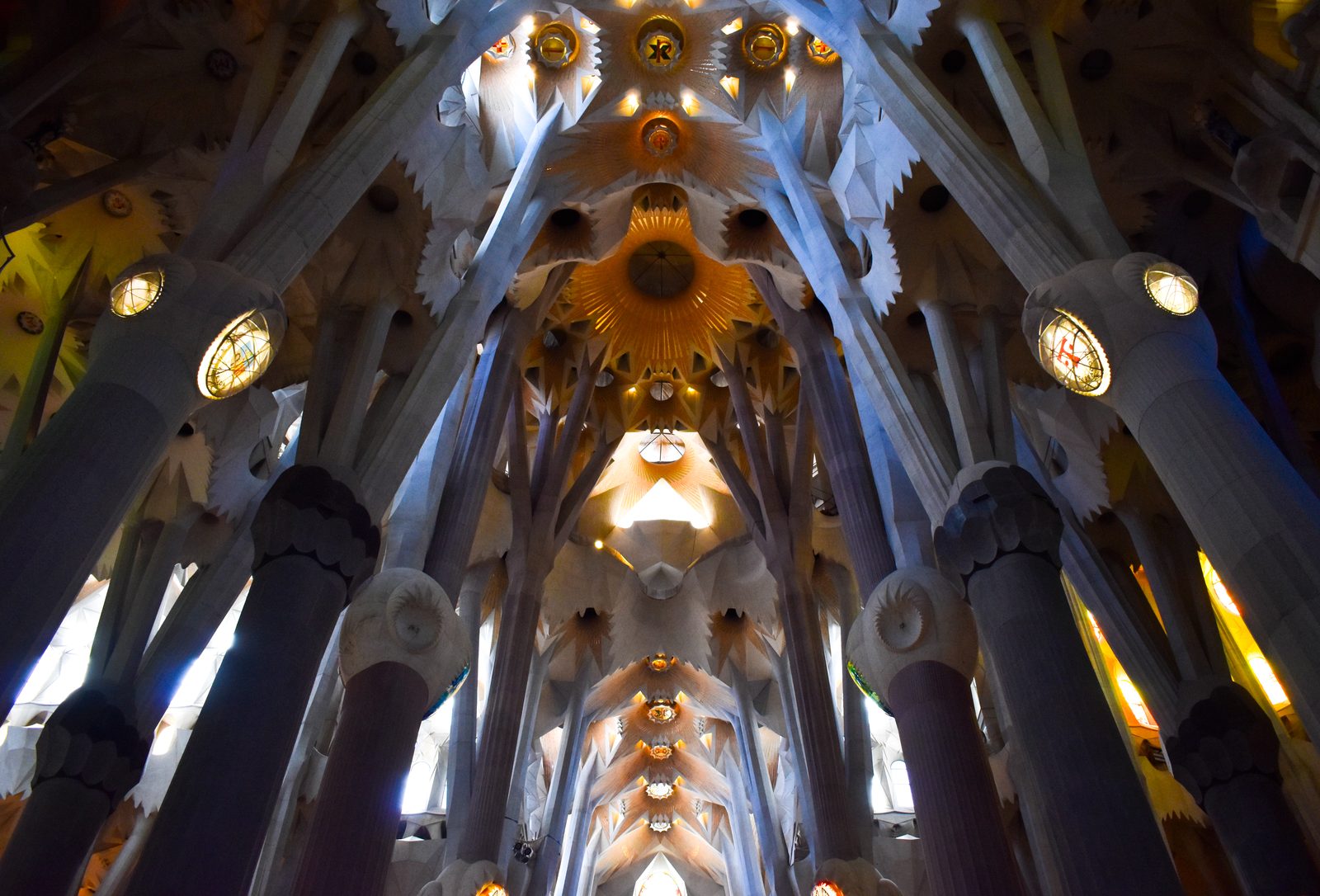
- Tuesday 9 afternoon: visit to the Basilica of the Holy Family. Here the most symbolic gesture occurs: the Pope formally inaugurates the basilica Let us remember: Benedict XVI consecrated the temple as a minor basilica in 2010, but the work had been going on for more than 140 years since 1882. This formal inauguration closes the longest cycle of religious construction in contemporary Europe — the work that Gaudí left unfinished when he was killed by a tram in 1926, now completed a century later.
- prayer vigil at the Lluís Companys Olympic Stadium in Montjuïc.
- Wednesday 10: pastoral meetings in Barcelona and transfer to the Canary Islands.
Canary Islands · June 11 and 12
- Thursday the 11th: public mass at the Gran Canaria Stadium with pilgrims from all over Spain. Visit to a migrant reception center in La Laguna (Tenerife).
- Friday the 12th: meeting with migrants and social workers. Farewell and flight back to Rome.
The program has a clear political message: Madrid is the establishment (Kings, government, Catholic hierarchy). Barcelona is culture and heritage (Holy Family, Gaudí, faith as a work of popular art). The Canary Islands are the border (migration, social justice, the Leo-XIII doctrine of Rerum Novarum applied to 2026).
That the Pope ends his visit speaking with migrants in La Laguna and not with politicians in Madrid is the message of the entire trip. Whoever wants to understand this pontificate must look at where they decide to be, not where they are forced to be.
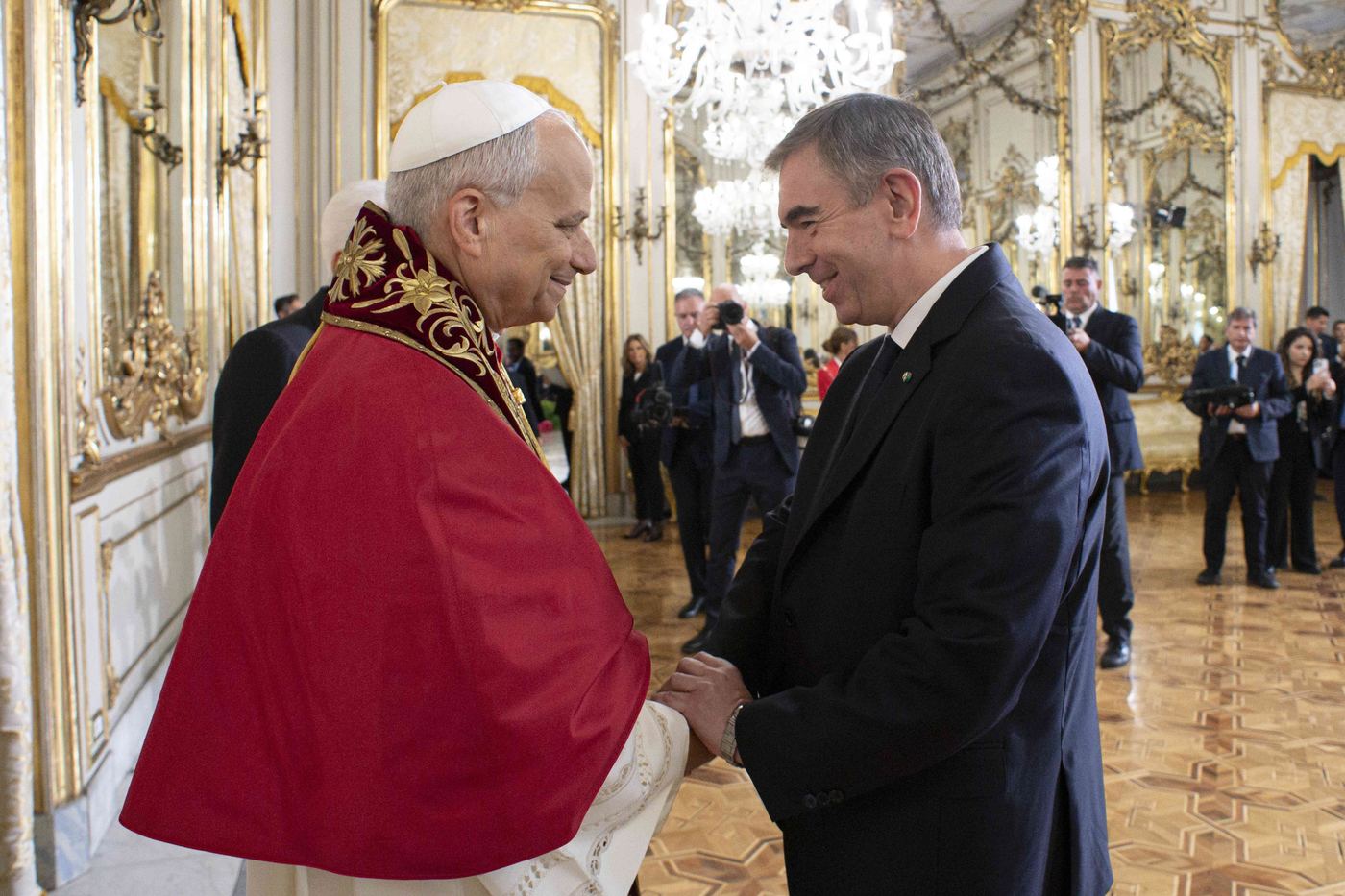
First official state visit of Pope Leo XIV to the Quirinale Palace, seat of the Italian presidency. Institutional rehearsal of what will be their arrival at the Royal Palace of Madrid on June 6: protocol, official photograph, meeting between Church and State.Photo: Quirinale Press Office · License CC BY 4.0 · Via Wikimedia Commons
The 15 years without a Pope: what silence says
The pause between 2011 and 2026 is the longest without a papal visit to Spain since Paul VI. It is not coincidental. Three reasons intersect.
Reason 1 — Accelerated secularization. In 2011, when Benedict XVI came, 71% of Spaniards declared themselves Catholic. In 2026, according to the latest CIS barometer, the percentage is 53%, with only 18% defining themselves as practicing Catholics. The Church no longer rules the Spanish public conversation like it did 15 years ago. A papal visit in this context is a gesture against the current.
Reason 2 — The conflict Francisco vs. the Spanish hierarchy. Pope Francis maintained a tense relationship with a good part of the Spanish episcopate, perceived as more conservative than him. Francis preferred to travel to "peripheral" countries — Iraq, Mongolia, South Sudan — rather than Spain. It was a theological message: the Church looks at the peripheries, not at the historical center that no longer needed it.
Reason 3 — Abuses. The 2023 Ombudsman report documented thousands of victims of sexual abuse by clerics in Spain, and the institutional response was slow, defensive and painful for victims. Coming as Pope to Spain without a deeper reparation would have been unfeasible.
That Leo XIV comes now — being the first American Pope, with deep Latin American experience, with a name that evokes social justice — is an attempt to reset the conversation. He will get it or not. But the strategy is readable.
"A week-long papal visit does not repair decades of institutional silence on abuses. But it can start another conversation. That depends less on the Pope than on the Spanish hierarchy who stays here when he returns to Rome."
The elephant in the sacristyThe faith industry: the money behind the incense
Here begins the part that many Catholics prefer not to read. But it is public and verifiable information.
El Vatican It is one of the few sovereign states in the world with its own bank (the IOR, Istituto per le Opere di Religione), its own currency with the euro printed especially for the Vatican, and a portfolio of real estate investments in London, Paris, Rome and Geneva valued in billions. It is not a convent — it is a state administration with all that that implies.
Spain: the specific case
In Spain, the Catholic Church receives income from three main routes:
- IRPF tax allocation: the "X" in the Catholic Church box. In 2025 it represented approximately 380 million euros collected from the income tax return.
- Tax exemptions: The Church does not pay IBI for the majority of its properties (temples, convents, schools, hospitals, diocesan headquarters). Calculations by the Secularism Observatory estimate the annual "savings" at between 500 and 1,000 million euros that city councils fail to collect.
- educational concerts: The State finances part of the network of charter schools, mostly Catholic. Tens of thousands of teachers are paid with public money in centers with religious ideology.
This is not anticlerical criticism — it is public accounting. The question is not "Is there a right to this?". The question is "Does the Spanish society of 2026, where only 18% are practicing Catholics, collectively decide to sustain this model?". It is legitimate political debate. What is not legitimate is to pretend that there is no economic flow.
Social work, in honor of the truth
The other side: the Spanish Catholic Church maintains an enormous healthcare network. Caritas It is the largest network of care for people in poverty in the country; United Hands works in development cooperation; Hundreds of soup kitchens, residences, hospitals and juvenile centers operate under an ecclesiastical umbrella.
To ignore this would be dishonest. The finer question is: Is the dogmatic packaging necessary to maintain social work? Or put another way: in countries where assistance has been completely secularized (Sweden, Denmark), is the social network worse than the Spanish one mixed with religion? The data suggests not, but the conversation is complex and depends on each context.
"The Church does what the State cannot"
Ecclesiastical social work reaches where the administration does not reach. Taking away public funding would be breaking a balance that works, with serious social costs for the most vulnerable.
"Social assistance must be public and plural"
Outsourcing care to a religious denomination with the power to veto content (sexual education, reproductive health) is problematic in a plural State. The healthcare network should be secular and universal.
"Support what works, make transparent what doesn't"
Neither delete nor keep intact. Audit spending, demand transparency, condition financing to verifiable standards. Defend Caritas; review IBI exemptions.
"Church and State, truly separated"
The 1979 concordat model is an anachronism. Other countries have dissolved it without social collapse. Spain should move towards a Scandinavian model, letting the Church sustain itself with the voluntary contribution of its faithful.
How does "God" communicate with people? Beyond the catechism
Here we have to open the door to a question that the Catholic institution answers with closed doctrine but that real human experience is much more diverse.
Official Catholic doctrine says that "God" communicates with people mainly through four channels: the Writing (the Bible), the Tradition (what the Church has taught throughout the centuries), the Magisterium (the Pope and the bishops in communion with him), and the prayer staff in a state of grace. Any other "voice" must be discerned by the Church to be validated — mystics, visionaries, modern prophets. If the Church does not validate it, the voice remains suspect.
This is a particular formulation. The human experience of the divine is much broader than any doctrine. Anyone who has been walking by faith for years — of any kind — knows this.
The Real Ways People Say "Feel the Divine"
These are some, without exhaustiveness and without pretending that they are all valid or not all:
- In nature. Walking alone through a forest, looking at the sea, crossing a desert. The immensity produces mystical experiences in people of all beliefs and none. It is the probable origin of all religion.
- In art. A piece of music, a painting, a poem that overflows. Schubert, Bach, Rembrandt, Rothko have made atheists cry. What moves there?
- In love. Not romantic idealization — real love, sustained over time, with its breaks and repairs. Caring for someone sick for years. Raise a child. Accompany a death. Whoever has done this knows that something bigger than oneself operates there.
- In the silence. Meditation, contemplation, days without speaking in a monastery or a cabin. What emerges in the prolonged silence does not obviously fall into the category of "own thoughts."
- In synchronicity. Significant coincidences (Jung called them that) that seem to guide important moments. Encounters that change lives. Books that appear in the right hand. Conversations that you didn't look for and they order something inside you.
- In the body. Somatic traditions (yoga, tantra, ritual dance) have for millennia described experiences of unity with something larger that are accessed through the body, not dogma.
- In the crisis. People who, in their darkest moment — grief, illness, failure — report feeling a presence that sustained them. Not always identifiable as "God" of the catechism. But real for them.
- At the table with those you love. Bread, wine, conversation, laughter. This is eucharist in the original sense — before the word was ritualized — and it happens every day in thousands of homes without anyone naming it.
"If God is what many believers claim — infinite, omnipresent, love — it would be absurd that he could only communicate through a specific human channel monopolized by a specific institution. Any honest theology has to admit that this institution is one way, not the only one."
The argument that many theologians make in privateThe testimony of Christian mystics
Curiously, the Catholic mystics most respected by the Church itself describe experiences that coincide with those of mystics from other traditions. Teresa of Ávila, Saint John of the Cross, Master Eckhart, Hildegard of Bingen — read together with Rumi (Sufi), Ramana Maharshi (Hindu) or Bashō (Zen Buddhist) — share a common core that goes beyond particular doctrines.
That suggests something: the human experience of the transcendent seems more universal than the theologies that attempt to organize it. The Church has had great mystics. But the great mystics have almost always been considered suspect by the institution itself during their lifetime (Eckhart was prosecuted for heresy; Teresa was on the verge of being denounced to the Inquisition). The institution rewards mystics after death, when they can no longer question it.
Is it necessary to go to mass to have spiritual life?
Direct question, split answer.
La official catholic doctrine He says yes: the "Sunday precept" (attending mass on Sundays) is the obligation of the faithful. Failure to comply without serious cause is, technically, a sin. This is in the Code of Canon Law and in the Catechism.
La sociological reality says something else: in Spain, more than 80% of those baptized no They observe that precept regularly, and many of them continue to identify themselves as believers. There is a huge disconnection here between what the institution demands and what its own members practice.
Is this disconnection a problem?
It depends on who you ask.
Yes, it is a serious problem
Faith without community practice weakens and dies. The body of Christ is a gathered community, not isolated individuals. Without Mass there is no sacramental life, without sacraments there is no full Christian life.
No, my faith is personal
I was baptized, I will get married in the Church, my children will receive communion. But my relationship with God goes through conscience and how I treat people, not through a mandatory hour on Sundays.
I don't need an intermediary institution
I meditate, I read mystics from various traditions, I go on retreats. My spiritual life is dense. The masses I know are empty rituals in poorly translated Latin-Spanish. They don't talk to me.
Yes I need it, and it sustains me
Weekly mass gives me structure, connects me with other believers, forces me to step outside of myself. The homily is not always good, but community practice is necessary for me.
What the psychology of religion says
Academic studies on religion and well-being (William James was a pioneer more than a century ago, today Robert Putnam, David Campbell, Andrew Newberg) agree on one thing: community religious practice has measurable positive effects in subjective well-being, longevity, reduction of depression and social bonds — effects that no They reproduce the same with purely individual spirituality.
The active factor appears to be regular community, not the specific theology. Choirs, hiking clubs, meditation groups or religious communities — they all have the same effect. The mass works largely because it is a community gathered regularly for a shared cause.
This suggests something important: if you give up the mass because theology does not fulfill you, It is advisable to look for a regular community elsewhere. Isolating yourself and reading spirituality books alone is not equivalent. Your psychology asks for tribe, not just doctrine.
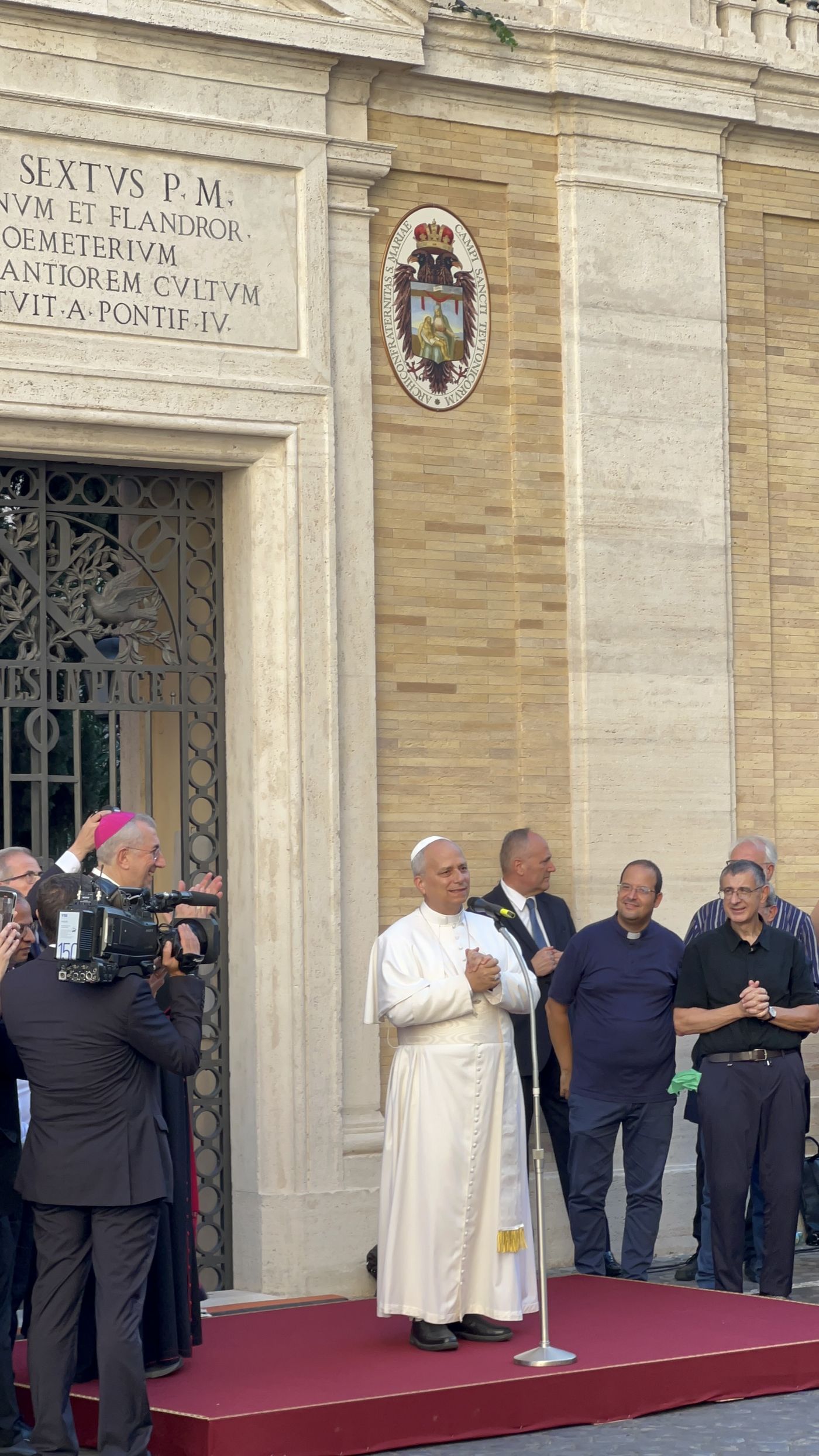
Pope Leo XIV greeting the faithful of the Archdiocese of Bari-Bitonto. The image captures what the sociology of religion confirms: the factor that sustains faith is not dogma, it is the community gathered around something shared.Photo: Ferdinando Traversa · License CC0 (public domain) · Via Wikimedia Commons
Cults: when a religious community crosses the line
The concept of "sect" is slippery. Sociologically every great religion began as a sect — a small, marginal group, in conflict with the dominant religion of its time. Christianity was a Jewish sect. Islam, sect of pre-existing Arab religions. Buddhism, sect of Hinduism. Only time and number turn sects into religions.
But in popular usage and in clinical psychology, "sect" has a more precise meaning: group that exercises coercive control over its members, restricts their freedom, and harms them.
Robert Lifton's criteria (1961, updated)
Psychiatrist Robert Lifton studied brainwashing in Chinese prisons and then applied the framework to religious sects. These are the eight criteria that identify coercive control groups, regardless of their theology:
- Environmental control — the group controls who you talk to, what you read, what media you consume
- Mystical manipulation — experiences presented as supernatural that are actually induced (sleep deprivation, fasting, repetition)
- Purity Demand — everything is divided between pure (the group) and impure (the outside)
- Confession — obligation to confess private thoughts to the leader or group
- sacred science — the group's doctrine is presented as absolute, non-questionable truth
- loaded language — internal vocabulary that reframes reality and isolates members from the outside world
- Doctrine about person — doctrine outweighs the member's personal experience
- Dispensation of existence — the group decides who deserves to exist and who does not (dissidents are "expelled" from reality)
The awkward question: Does any major religion meet these criteria?
Honestly: partially, yes. Some communities within majority religions comply with several or all.
Opus Dei has been accused for decades of operating on various Lifton criteria. The Priestly Society of Saint Pius X. Closed communities within the Neocatechumenal Way. Ultra sectors of Judaism, Islam, and evangelical Christianity. And also — and this is uncomfortable to say — Hindu and Buddhist communities in the West that present themselves as pure spirituality but operate with coercive control (NXIVM presented itself as coaching; certain yoga groups have functioned the same).
The difference between healthy religion y harmful sect It is not the theological content — it is the operating mode. An ordinary, open Catholic parish, where you can go or not go and no one holds you accountable, is not a sect. A closed community that controls your life, your relationships and your finances, yes it is, whatever it is called.
The sectarian pattern does not depend on the spiritual content but on the structure: central leader, members revolving around, closed border with the outside.
How to recognize if a spiritual community you belong to is healthy
Five questions you can ask yourself:
- Can you leave for free? If leaving the group means losing friends, family or reputation, there is already a problem.
- Do they encourage you to have a life outside the group? Healthy communities celebrate your external relationships. Sects erode them.
- Can authority be questioned? If the leader's word is irrevocable law, a bad sign.
- Do they ask you for things you wouldn't ask of a friend? Excessive money, secrets about your intimate life, submission.
- Are people who come out treated with contempt? Cults need to demonize those who leave. Healthy communities let them go with affection.
Your family as your best "sect": love as a private religion
Here is the provocative heart of this text. The metaphor is deliberate: Calling the family a "sect" is a rhetorical game to say what follows.
If a cult demands unconditional loyalty, time, emotional energy, money and vulnerability from its members, and in return offers them belonging, meaning and community... then the family also demands all of that. The key difference is: a sick sect, a healthy family heals. A sect extracts, a healthy family gives back.
When someone seeks spirituality outside—in a group, in a church, in a guru, in self-help—it is often because they are seeking what the family should have given and did not give: unconditional acceptance, shared meaning, presence that does not judge, love that does not demand performance.
If the family of origin did not give it (and almost none of them give it at all — it is an asymptotic ideal), there are two realistic options: look for it outside in some chosen community or tribe; either build it inside of the family you create — with a partner, with children, with friends who become chosen family.
Why can the chosen family be "the best sect"?
Four reasons, without romanticizing anything:
- You have continued presence. You know those people on their good days and bad. It is not the idealized contact of an hour of mass — it is shared life.
- There is real reciprocity. You take care and they take care of you. The exchange is palpable, not abstract.
- Conflict is learned to navigate. In a sect the conflict is repressed or the dissident is expelled. In a healthy family you process, you cry, you start again.
- Love is not transactional. You don't have to render a paper, you don't have to tithe, you don't have to profess faith in a dogma. They love you, better or worse, for being who you are.
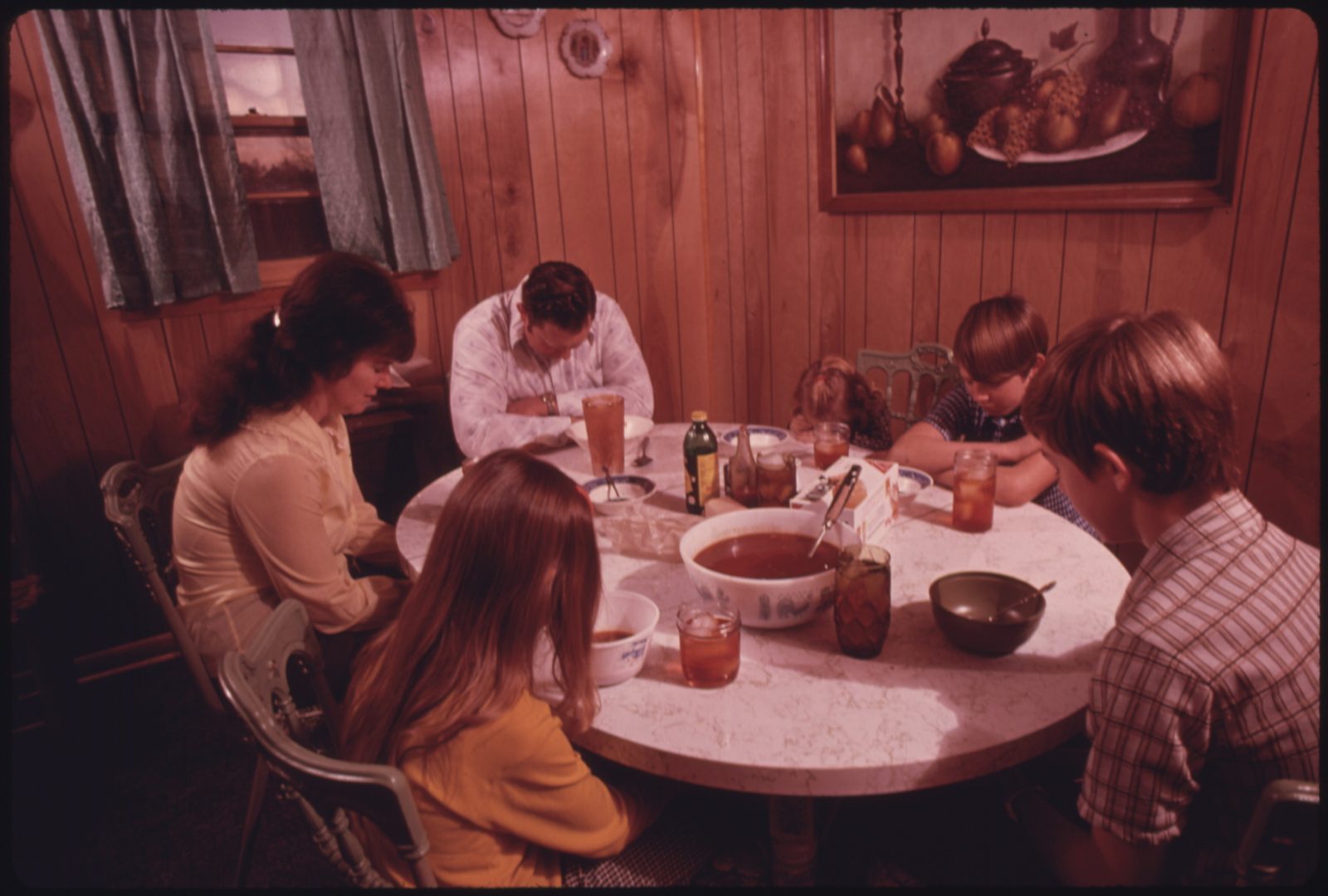
A family gathered around the table before dinner. The photography — documentary from the 1970s — captures something older than any religion: community gathered, food shared, meaning embodied in small, everyday things. This is eucharist in the original sense.Photo: Jack Corn · Public domain · National Archives and Records Administration (USA) · Via Wikimedia Commons
But be careful: the toxic family is also a sect — and worse
The argument is reversed if the family operates as a harmful cult. Controlling, narcissistic families, where you cannot dissent, where love is conditional, where loyalty is demanded at the price of your own voice — they are the worst possible sect, because unlike a religious sect, you can't completely "opt out." Your father will remain your father.
That is why this argument has two sides:
- If you come from a healthy family: cultivate it. It is the most underrated spiritual gold of your life. Have dinner with them, take care of them, leave your phone. The sacred lives there.
- If you come from a harmful family: You have the right to build a new one. Friends who become family, chosen couple, creative community, tribe. Blood is not the only valid bond. Choosing your family is as legitimate as inheriting it.
"If you have to give your life to something, let it be to the people who will sit with you in silence when you are sick. Not to an institution that will charge you mental IBI for decades in exchange for promises it cannot verify."
A kind heresyCreativity as a religious act: what Julia Cameron and the mystics shared
Here I close the circle. This blog is called Your Artist's Path because it is dedicated to Julia Cameron's method — and Cameron has an intuition that connects directly to all of the above.
Cameron, in his books, says something that seems strange at first: creativity is spiritual practice. Not metaphor. Concrete spiritual practice, with techniques (morning pages, appointments with the artist, weekly exercises), with teachers, with tradition.
His thesis: When you create — writing, painting, composing, cooking, parenting, teaching — you enter a state where something larger than your everyday self operates through you. You don't have to call him God. You can call it the Unconscious, the Tao, the flow, the Muse, the Spirit, the Transcendent. The name doesn't matter — the experience is real.
Cameron explains that this coincides exactly with the experience of Christian mystics. Saint John of the Cross spoke of "the living flame of love" that burned in his chest during prayer. It is the same thing that a poet describes when something "writes" to him. Teresa of Ávila spoke of interior "dwellings." It is the map of the creative process.
Why this Pope can understand this better than his predecessors
Leo XIV is an Augustinian. The Augustinian tradition emphasizes interiority — the search for God inside, not out. Saint Augustine wrote: "Do not go outside, enter into yourself; truth dwells in the inner man".
That 1,600-year-old formulation could have been written by Julia Cameron in 1992. It is the same intuition: the deepest thing is not in a distant cathedral, it is in the notebook where you write three pages every morning without censorship. It's in the weekly appointment with yourself where you let yourself explore. It's in the creative project that you have inside and you haven't allowed yourself to start.
This does not require you to be Catholic. It doesn't even require you to believe in "God." It requires you to take seriously that There is something in you that is wiser than your everyday self and that can communicate with you if you open a regular channel to it.. Call it what you want.
Any sustained creative practice — morning writing, music, drawing, cooking — functions as a spiritual practice. It is no coincidence that mystics have always been artists and the great artists had a mystical life.
My honest opinion — no single truth to sell
If you've made it this far, thank you for reading a long text in an era that prefers 15-second videos. I owe you honesty about where I am in all of this.
I am not a practicing Catholic. I am not a militant atheist. I am not selling a spiritual alternative. I don't have a guru. I have no definitive answer as to whether "God" exists or not — and I deeply distrust anyone who does.
What is clear to me after years of thinking this:
- The religious question is legitimate. Atheist mockery is as dogmatic as the dogma it seeks to criticize. There are millions of intelligent and profound people who have real mystical experiences. To dismiss them as a brain illusion is to lose a lot of human information.
- Religious institutions are human. Imperfect, historically charged, capable of the best and the worst. The Catholic Church cured lepers and burned heretics. Both things are true. Saying just one is propaganda.
- Personal spirituality does not require an institution, but yes it requires discipline. Whoever says "I am spiritual but not religious" and does not practice anything regularly, is usually saying "I am neither of the two, it only comforts me to think that I am."
- Community is necessary. Contemporary hyperindividualization is the true cult — they sold us that we can do everything alone and the consequence is epidemic loneliness. We need a tribe, whatever it is called.
- Concrete love outweighs abstract doctrine. Taking care of those next to you, cooking for someone, listening to a friend, raising a child with presence — this is worth more than a thousand theological debates. Any tradition that is distracted from concrete love has been lost along the way.
Pope Leo XIV is in Madrid today. He is a serious, educated man, with real experience with the poor. His pontificate may surprise. But neither he nor anyone else can give you what is only built from within.. The serious spiritual life is the job of the person — not the hierarchy, not the fashion, not the Instagram guru.
If you are interested in starting that work from a secular, accessible framework, without asking you to believe in anything, I recommend Julia Cameron's method — which this blog is about. The morning pages, the artist appointment, the 12-week exercises are real spiritual practice disguised as a creative method. It works whether you are a believer, agnostic or atheist.
And if what excites you most about the Pope this week is not the Pope but have a long dinner with your family —that intuition is correct. There is the gold.