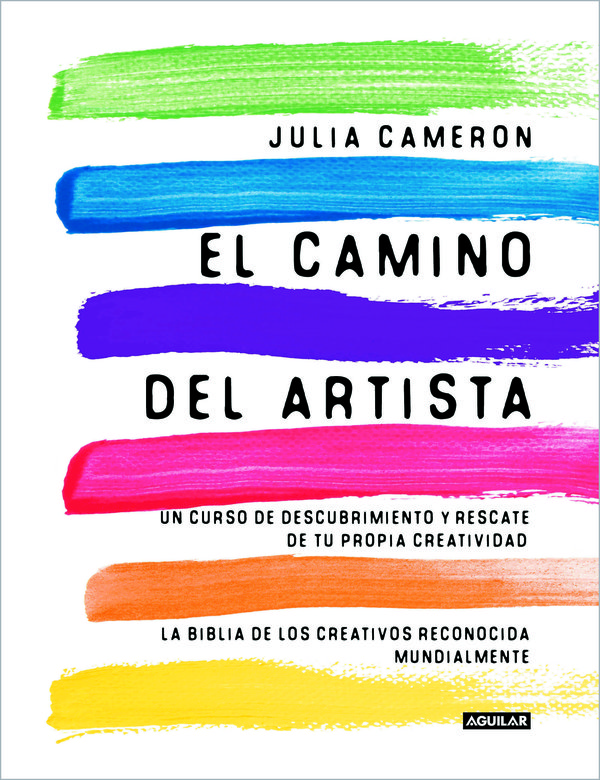
In March 1948, in a hospital in Lake County, Illinois, the second of seven children was born to an average American Catholic family. Her name was Julia Beatrice Cameron. No one, not even herself, would have imagined that, seventy-eight years later, her name would be cited in Silicon Valley podcasts, in interviews with Grammy winners, in therapy sessions, in Smithsonian workshops, and in the footnotes of the personal bibliographies of artists such as Pete Townshend, Elizabeth Gilbert, Alicia Keys, Patricia Heaton, Martin Short, and Tim Ferriss. This post tells — exhaustively, with dates, sources and context — how that girl from Libertyville became the most influential figure of the last three decades in terms of creativity, and what is really behind it. The Artist's Path, the book that sold more than five million copies, was translated into more than forty languages and — according to her — was never intended to be a book. It was originally some notes for his own students.
Post summary
- Birth: March 4, 1948, Libertyville, Illinois. Second of 7 siblings, Catholic family.
- Training: Georgetown → Fordham. Journalist at 20: Washington Post, then Roleling Stone, then Oui Magazine.
- 1975-77: She meets, marries and divorces Martin Scorsese. Domenica is born. Uncredited co-author on screenplays Taxi Driver, New York, New York and surrounding material American Boy / The Last Waltz.
- 1978: hits rock bottom Blackouts, paranoia, psychosis. Give up alcohol and drugs. She begins to teach her students the practices that fourteen years later will be the book.
- 1989: directs his own movie, God's Will, based on her marriage to Scorsese.
- 1992: publish The Artist's Way with Tarcher/Putnam (today Penguin Random House). 5+ million copies in 40+ languages.
- From 1992 to 2025: publishes more than 50 books — complete series, memoirs, novels, poetry, plays, musicals. Current residence: Santa Fe, New Mexico.
- Cultural impact: from Pete Townshend (The Who) in the 90s to Alicia Keys and Tim Ferriss in the 2010s. The book works as covert therapy in creative industries.
- Further down in this post: COMPLETE annotated bibliography + link to a post dedicated to in-depth analysis of each of his main books.
Index
- Libertyville, Illinois — the girl in a family of nine
- Georgetown, Fordham and the vocation of journalism
- Washington Post and Roleling Stone — the journalist of the 20s
- Oui Magazine, the meeting with Scorsese and Taxi Driver
- The one-year marriage (1976-77)
- Domenica on the set of New York, New York
- Liza Minnelli and the end
- The scripts: Taxi Driver, New York New York, American Boy, The Last Waltz
- 1978 — the bottom. Alcohol, cocaine, psychosis
- Sobriety and the accidental discovery of the method
- The 80s — dark years, fertile years
- God's Will (1989) — the film about their divorce
- 1992: born The Artist's Way
- Why Tarcher/Putnam and how the book went viral before the internet
- The trilogy: Vein of Gold → Walking in This World → Finding Water
- The complete bibliography — more than 50 books
- Filmography, plays, musicals and poetry
- Santa Fe — life today (2026)
- Who has publicly done the method: from Pete Townshend to Alicia Keys
- The five central principles of his thinking
- What book to read and in what order — recommended itinerary
- Frequently asked questions
Libertyville, Illinois — the girl in a family of nine
Libertyville is a small town in Illinois, forty-five minutes north of Chicago, with a short main street, several churches — one of which is Catholic and called St. Joseph — and about five thousand families by the time Julia Cameron is born. It is March 4, 1948. His parents, James and Dorothy Cameron, are practicing Catholics. They have seven children. Julia is the second. The father works in advertising and is a well-read, creative, somewhat unstable man. The mother - Julia will tell it years later in her memory Floor Sample — is the emotional backbone of the family, a woman with artistic gifts who never managed to practice them professionally.
Julia's childhood is the classic one of an upper-middle class Catholic family in the American Midwest: mass on Sunday, nuns' school, siblings fighting for space at the table, summers in the garden, a lot of reading and a father who, although loving, already had a problematic relationship with alcohol that subsequent generations would inherit as an echo. Julia has been writing since she was seven years old. It is not an exaggeration: in Floor Sample He describes notebooks filled with short stories, plays performed with his sisters, lyrics to songs that he later sang in front of the mirror. Creativity is, for her, the natural channel of expression since before she even knew that the word "creativity" existed.
It is important to fix this detail. Years later, when I write The Artist's Path, will repeatedly talk about "child inner artist" as something that we all carry inside and that most of us have learned to silence. It's not an abstract metaphor for her — it's seven-year-old Julia writing stories in a lined notebook in Libertyville. When Cameron tells the reader that "Look for the child artist that still lives inside you", does so from the specific experience of someone who remembers very well who that girl was before the world convinced her that she should be something else.
Georgetown, Fordham and the vocation of journalism
Cameron finishes high school with good grades and enrolls in Georgetown University, one of the most prestigious Jesuit universities in the United States, in Washington D.C. It is 1966. He chooses Georgetown because he wants to get away from the Midwest, because he is attracted to the idea of a rigorous humanist education and because — although he doesn't know it yet — he needs to be close to the cultural noise of the capital. He studies there for a couple of years but doesn't fit in. Georgetown Jesuits are — in her own words — too doctrinaire for her. She has started reading feminist authors. He has begun to question the faith he grew up in. He has started to write for real, not just for pleasure.
It is transferred to Fordham University, another Jesuit university but this time in New York, which offers you something that Georgetown couldn't: the city. Manhattan and the Bronx are, in 1968, the center of the world. New York is bustling. The Village Voice publishes experimental poetry. The magazines underground They hire young women with good pen. Julia, who is twenty years old, is up to her neck in that world. He collaborates with university publishtions, interns at small magazines, and moves around jazz clubs and bookstores in Greenwich Village. It's still invisible. But he is sharpening the tool that will open the first big door of his life: journalistic style.
At Fordham he studies English literature. Read with fanaticism. Hemingway, Joan Didion, Mary McCarthy, Norman Mailer, Susan Sontag, Truman Capote. The New Journalism — that American movement that said journalists could use techniques from the novel to tell reality — fascinates her. And almost without realizing it, towards the end of the career, he is already writing with that tone: first person, constructed scene, short phrase, sharp observation. That voice will place her, a couple of years later, within the editorial staff of one of the most influential magazines on the planet.
Washington Post and Roleling Stone — the journalist of the 20s
Julia Cameron's first serious job is at Washington Post, in the early seventies. He is just over 22 years old. She works in the lifestyle and culture section — the angle traditionally assigned to young reporters in the American press at the time, but which was, in practice, one of the most dynamic sections of the newspaper due to its narrative freedom. The Post, in the midst of the post-Watergate era, is a newsroom with a brutal pace and very high editorial demands. Cameron learns there the discipline of daily closure: writing, revising, publishing. Three pages, five pages, two thousand words, tomorrow at nine. Every day. That discipline will never abandon her. The habit that he will later teach as "morning pages" has, whoever wants to see it, a journalistic DNA: sit down every morning and write a minimum amount without waiting for inspiration.
From there he jumps - not taking long - to Roleling Stone. The seventies are the golden decade of Roleling Stone: Jann Wenner directs it from San Francisco and the magazine has gone from hippie rocker to top-level cultural power. Hunter S. Thompson writes there Fear and Loathing in Las Vegas. Cameron Crowe is sixteen years old when Jann Wenner commissions his first report. And into that environment — fierce, competitive, intensely masculine — enters Julia Cameron, one of the few women with a regular signature. He writes profiles of musicians, cultural chronicles, long pieces about the Californian scene. An easily searchable central archive of his signatures in Roleling Stone has not been preserved, but his official biography and several journalistic sources confirm the stable employment relationship between 1973 and 1975.
There is a relevant detail for what comes next: Cameron is learning, in those years, to interview artists in their most vulnerable moments. A Roleling Stone journalist doesn't write "So-and-so said X." Write "So-and-so took off his glasses, looked out the window for eight seconds, and only then said X." It is a school on how creativity is produced: it is not just the final product, it is the ecosystem, the noise, the blocking, the tics, the pauses, the coffee getting cold on the table. Fourteen years later, when Cameron writes The Artist's Path, all that empirical material — hundreds of hours of observing artists at work — will be the substrate of his method. Cameron doesn't make up his ideas. He distills them from years of observing musicians, screenwriters, actors and painters whom Roleling Stone paid him to profile.
Oui Magazine, the meeting with Scorsese and Taxi Driver
In 1975, Julia Cameron jumped from Roleling Stone to Oui Magazine, a magazine founded by Playboy Enterprises with a more sophisticated will and a more European point than its older sister. Oui pays well and allows long pieces. Cameron accepts assignments that combine culture, politics and film. Among those assignments, they propose one that will split his life in two: interview a young, Italian-American film director, with five films already shot and an intensity that was provoking comments everywhere. The director's name is Martin Scorsese and is finishing a film titled Taxi Driver with Robert De Niro and Jodie Foster, whose script was written by a certain Paul Schrader.
Cameron travels to meet Scorsese. He is 27 years old. He is 32. The interview — which in the archives appears sometimes associated with Oui, sometimes with Playboy — lasts longer than expected. Scorsese is, in person, everything Cameron expected and something else he didn't expect: he is someone who talks about cinema with the same intensity with which she is beginning to write about it. It teaches him things. He passes him the script Taxi Driver before filming. He asks him — and this has been documented in multiple sources — for his opinion on Schrader's script. Cameron, with her job as a cultural journalist and her eye as a reader, suggests small adjustments. Nothing massive. Nothing that changes Schrader's official signature as a screenwriter. But concrete contributions to the dialogue and some scenes. It is a role — very common in Hollywood and very rarely publicly recognized — of uncredited writing contributor.
In parallel, something much bigger human is happening. The two fall in love with a rapidity that both will later admit as disturbing. Cameron is a bright young journalist on the rise. Scorsese is a director at the height of his first great creative peak — he just filmed Alice Doesn't Live Here Anymore (1974), is about to be released Taxi Driver (1976) and prepares New York, New York (1977). They are both working, they are both drinking a lot, they are both using cocaine the way cocaine was used in Hollywood in the mid-seventies, which is to say: without awareness of what that drug was about to do to an entire generation. And the two decide, with the classic impetus of a love in a state of grace, to get married.
The one-year marriage (1976-77)
They get married in 1976. Civil documents record it as a second marriage for Scorsese (he had previously been married to Laraine Marie Brennan, mother of his first daughter Catherine) and first for Cameron. The wedding is low-key — Cameron is pregnant. That same year, 1976, born Domenica Cameron-Scorsese, the daughter of the two. Cameron literally, according to the official account later confirmed by Domenica herself, leaves the hospital with the newborn girl and takes her directly to the set of New York, New York, which Scorsese is currently directing with Robert De Niro and Liza Minnelli.
That scene — the 28-year-old journalist with a days-old baby in her arms, on the set of a film that will end up being a box office failure but a cult classic — is, seen from today, the perfect emblem of the entire marriage: intense, cinematic, messy, brilliant, unsustainable. Cameron will later describe it with the devastating honesty that characterizes his prose: "We tried with all our strength, and with all our strength it was, evidently, with the type of strength that each one had at that age — not the ones that were needed".
The marriage lasts just one year before the first separation and another year until the formal divorce. They legally divorced in 1977. Cameron maintains custody of Domenica. Scorsese has visitation rights and, ofspite the storm, he will always maintain a close relationship with his daughter, who will end up being an actress and who years later would even appear briefly in The Wolf of Wall Street (2013) from his father.
Domenica on the set of New York, New York
Domenica Cameron-Scorsese — born in 1976 — is, by biographical construction, a mix of the two most interesting people of her time: a twenty-eight-year-old brilliant journalist and a thirty-three-year-old director who had just released Taxi Driver. She will grow up between New York and Los Angeles with a mother who obsessively protects her from the world of cinema (paradoxically) and a father who progressively integrates her into it. He will study theater at NYU. She will be an actress — with roles in The age of innocence (1993) from his father, and then in independent projects. Later he would also direct and write his own work.
For our story what is relevant is something else: Domenica is the human thread that unites the entire story. Cameron, in his memoirs and in multiple subsequent interviews, has returned again and again to talk about his daughter. Of raising her as a single mother while dealing with her own recovery from alcoholism. To teach him that creativity was not a luxury, but a basic way of being in the world. How — and this is significant — Domenica made her own childhood "morning pages" before that term even formally existed, because Cameron would buy her notebooks and ask her to write things down every morning as a game.
When in 2013 Cameron published The Artist's Way for Parents, many of the examples in the book will come directly from raising Domenica alone between Chicago and New York in the 1980s. The book will be, in a sense, the open letter that she couldn't write to her own mother — and the manual she wishes she had when she was raising a child amid moving homes, economic crises, and her own recovery from addiction. Post dedicated to this book →
Liza Minnelli and the end
The story is known although rarely told with nuance. During the filming of New York, New York (1976-77), Scorsese and Liza Minnelli — who played the main female character — begin a relationship. Cameron is alive, present, with their daughter in her arms, and she finds out with the rawness with which couples always find out about these things. The story she gave later – nuanced, without theatrical rancor, but clear – is that "I lost a world and gained a world". He lost Martin. He lost common friends from the cinema environment. She lost — for several years — the feeling of belonging to the club she had joined, and in which she had begun to feel comfortable.
The divorce is finalized in 1977. Scorsese and Minnelli have a public relationship that will also end relatively soon, and Scorsese's career enters one of its most turbulent phases — the years of heavy cocaine that will only be cut short when Robert De Niro literally rescues him from an overdose in 1978 and forces him to go to work on wild bull. But that's another story. Ours goes back to Cameron.
"I lost a world. I lost Martin and all our mutual friends, and for a long time I thought the party had left without me. Everyone was still moving at full speed and I had stopped dead and told myself: this has to change or I'm dead."
Julia Cameron, talking about the end of her marriage and the beginning of her sobrietyThe scripts: Taxi Driver, New York New York, American Boy, The Last Waltz
This is the most misunderstood point of his career. Two things must be separated: (1) the official credits — which are very clear — and (2) the material contributions — which were abundant but not always accredited.
Taxi Driver (1976)
Official credit: Paul Schrader. Cameron does not appear in the titles. But in later interviews from the 1990s and 2000s, and in footnotes to books about Scorsese, it has been documented that Cameron read the entire script before filming, provided extensive written comments, and proposed specific adjustments — especially in the dialogue of the character of Betsy, the campaign worker played by Cybill Shepherd. Those contributions were never officially recognized.
New York, New York (1977)
Official credit: Earl Mac Rauch and Mardik Martin. Cameron doesn't show up. But she was present for almost the entire shoot — with a newborn in her arms — and participated in script rewrites on set. This is confirmed by both her and several memoirs of the film's technical team.
American Boy: A Profile of Steven Prince (1978)
Short documentary produced by Scorsese about his friend Steven Prince. Cameron does not appear in the credits but collaborated in the interview portion from the perspective of his journalistic profession. It is the documentary from which Tarantino, many years later, will literally steal a scene — that of the injection of adrenaline into the heart — to Pulp Fiction.
The Last Waltz (1978)
Scorsese's documentary about The Band's farewell concert in 1976. Cameron was the go-to journalist for some of the material because she had already written about Robbie Robertson for Roleling Stone.
All these credits — or non-credits — are material to understand a pattern: Cameron was an extraordinarily capable writer who was being used without recognition by the Hollywood system. The 1970s film system allowed a director (or official screenwriter) to "take notes" from his partner without it materializing in an on-screen credit. For many men it was normal. For many women it was humiliating. That tension — that of knowing that your work is invisible when it is someone else's and urgent when it is your own — is one of the underground driving forces of everything. The Artist's Path. When Cameron writes the book, he will talk obsessively about "recover your own voice". It is not an abstraction. This is what he did from 1978 to 1992, every morning, in notebooks that no one else was going to read — because he had already seen what happens when your words end up in other people's mouths without your name on them.
1978 — the bottom. Alcohol, cocaine, psychosis
The second marriage is over. The ex-couple is with Liza Minnelli. She has a two-year-old daughter to raise alone. New York leaves her — she moves to Los Angeles sometime in 1977-78 — and in Los Angeles cocaine is cheaper and alcohol more accessible than water. Cameron, who was already drinking heavily during her marriage, enters what she herself has described as the abyss. Whole nights without sleep. Paranoia. Psychotic episodes. Blackouts. Waking up without remembering what day it is, what day it was, what he did, where Domenica is.
And here is a detail that is important not to romanticize and not to hide. There is a night — Cameron tells it without a specific date, but it is between the end of 1977 and the beginning of 1978 — when something breaks inside. It may have been a particularly severe psychotic episode. It may have been an argument with a boyfriend at that time. Maybe it was Domenica crying because her mother was not in a position to care for her. What Cameron recognizes in his memoirs is that At some point during those weeks he decided — without drama, without a program, almost technically — that he couldn't continue like this..
In 1978 he stopped drinking and taking drugs. He does not enter any famous program — although he later recognized the influence of the twelve steps of Alcoholics Anonymous on his thinking. She does it at first alone, with occasional support from friends and with a daily discipline that begins to resemble an experiment: Every morning, when he wakes up, he sits down with a notebook and writes three pages. Aimless. No structure. No idea what's going to come out. Just like an anchor that fixes her to the day.
That gesture — three pages by hand every morning without a goal — was not invented by her. He has seen it done by some musicians and writers he interviewed in Roleling Stone. You have read it in biographies of artists. But she reformats it for herself and, by accident, discovers something that fourteen years later she will publish: that morning writing, if maintained over time, changes the brain. The anxiety of an emotional hangover is reduced. Obsessions are externalized. Problems become manageable. And, more importantly — ideas start to appear. Ideas for stories, songs, scripts, your own movies. Creativity, which seemed dead, returns.
Sobriety and the accidental discovery of the method
In 1979, already a year sober, Cameron began teaching classes. At first they are private classes in her living room — to other women around her, many of them also coming out of complicated marriages, many also trying their hand at writing again after years of not writing. She explains to them what she is doing with the morning pages. She suggests "dates with the artist" exercises — weekly outings alone to do something aesthetically nourishing, which she had also begun to practice. And, above all, she accompanies them in writing in a process of creative unlocking that, for all of them, is working.
Those private classes become more structured workshops. During the 1980s — the decade in which Cameron continued writing, translating, surviving financially with small scripts and journalistic pieces, and raising Domenica — his workshops grew little by little. Teach in the smithsonian, in it Esalen Institute of California, in the Omega Institute of New York, in the Northwestern University, in it New York Open Center. She's not famous. But between word of mouth from artists and writers who have taken his twelve-week workshop, something is cooking.
His students ask him for material. Notes. An exercise notebook. Something to take home. Cameron prepares photocopies for them. Then more elaborate documents. Then a small self-published book. And finally, in 1991, an editor at Tarcher (a publisher specializing in personal growth books) who knows his work suggested publishing the entire manual in commercial book format. Cameron accepts - with fear, because he had already published essays that had passed unnoticed - and begins to rewrite it for six months. The book is titled The Artist's Way: A Spiritual Path to Higher Creativity. appears in May 1992. And it quietly changes the publishing world.
The 80s — dark years, fertile years
Before we get to 1992 we have to stop at the 80s. They are underrated years in Cameron's public biography because the noise of the divorce and the noise of the book cover up everything in between. But the 80s is when everything that will explode later is cooked.
What Julia Cameron does between 1978 and 1992 — the fourteen silent years
- Breeding Domenica as a single mother, mainly in Los Angeles and Chicago.
- Maintains his sobriety uninterruptedly since 1978. He has never drunk again.
- Teach workshops informals in Los Angeles, Chicago and New York. The method is being consolidated with direct feedback from hundreds of students.
- Write scripts. Not all of them are produced. One of those that does occur is God's Will (1989), which she directed. Another is an episode of Miami Vice (1987).
- Publishes his first non-fiction book: a co-written with Mark Bryan titled Money Drunk, Money Sober about money addiction and creativity — although the popular edition comes later, the first drafts date from the mid-80s.
- Write plays which are represented in alternative circuits: Public Lives, Four Roses, The Animal in the Trees.
- Start composing songs and to work on his first musicals, which will be released years later (Avalon, Magellan).
- Write poetry — This Earth, published later, contains material from this decade.
In other words: Cameron spends the 80s quietly building the edifice of his later work. There is no media success. There is no fame. There is daily discipline — three pages each morning — and a body of work that quietly grows. It is the perfect illustration of one of its central ideas: Sustained production over time is more important than punctual talent. Almost every famous artist has, in his biography, ten or fifteen years of invisible work before recognition. Cameron had them like the rest. Nobody was looking.
God's Will (1989) — the film about their divorce
In 1989, eleven years after the divorce, Cameron does something that few people dare to do: writes, produces and directs a film directly inspired by her marriage to Scorsese. The film is titled God's Will. It is a small independent production, shot with a modest budget, premiered at the Chicago International Film Festival, selected for the London Film Festival, the Munich International Film Festival and the Women in Film Festival. It receives good reviews in arthouse film circles. Variety reviewed it in 1988. It never becomes a commercial success — it never intended to.
The plot is simple: a couple made up of a journalist and a film director are going through the last weeks of their marriage while trying to raise their young daughter. The central tension of the script – which Cameron signs – is professional asymmetry: the man's career takes off while the woman's remains on hold, and this imbalance becomes unsustainable. You don't have to be a cultural detective to recognize autobiographical material. Cameron has never denied it. Scorsese, as far as is known, never publicly commented on the film.
God's Will It is important for two reasons. First: it is proof that Cameron could direct, not just write. Second: it is the last great gesture of reconciliation with a part of his biography before moving on to the next phase. With God's Will closed and released, Cameron stops looking back. The life that followed was going to be different.
1992: born The Artist's Way
Jeremy P. Tarcher is a Los Angeles editor with a small but influential publishing house. In 1991 or early 1992 — the exact dates vary depending on the source — a manuscript called The Artist's Way. It was passed along to someone who met Cameron at one of his workshops. Tarcher reads it and, according to his own wife, says something similar to "this either sells ten million or none sells." He edits it carefully. It maintains the twelve-chapter—twelve-week—structure that Cameron has developed in his workshops. Publish. First printing: relatively modest by Tarcher standards.
The book does not sell well in its first weeks. It also doesn't explode after a year. What happens with The Artist's Path — and it is one of the most studied publishing phenomena of the last thirty years — is that grows laterally. Word to ear. One artist passes it on to another. A writing teacher recommends it. A group of mothers buys it in bulk for their book club. By 1994 it was already on the lists. By 1996 it is a phenomenon. Around 2000 it is mandatory in art schools. By 2010, after the acquisition of Tarcher by Penguin (now Penguin Random House), it is part of the permanent catalog of the world's largest publishing group.
The accumulated figures are, according to data published by the publisher itself in 2022 (30th anniversary), more than five million copies sold, translations to more than forty languages and a permanent place in the top 10 best-selling creativity books in history. But the numbers don't capture what's important. The important thing is this: it is one of the books that more times it is given among creatives around the world. From hand to hand, with written notes, with folded pages. A copy can go through three or four owners before remaining on a shelf.
Why Tarcher/Putnam and how the book went viral before the internet
There is something fascinating about the rise of The Artist's Path: happened before the internet. There is no Amazon of automated recommendations in 1992. There is no TikTok of bookstagram in 1994. There is no Oprah's Book Club pushing it (it was never officially selected by Oprah, although Oprah has talked about the book on several occasions over the years). The book grew by pure human contagion, which gives it a particular shape.
Books that grow online tend to explode quickly and decline quickly — their peak coincides with the hype. The books that grow by word of mouth, on the other hand, they accumulate. They don't lose speed because they never had it. Every year that passes, another circle of new readers discovers it. Each young generation of writers and painters finds reference in the gratitude of someone they respect. And every four or five years the book appears in an article in The New York Times, of Guardian, of the BBC, with headlines like "why this 1992 book is having another moment". The last boom — the one we are still experiencing — began around 2018 and is still active, with an unexpected boost during the pandemic, when confinement forced millions of people to sit down and put their creative projects on hold.
The trilogy: Vein of Gold → Walking in This World → Finding Water
Cameron does not write a sequel to The Artist's Path until the original book is already consolidated. It does so with editorial intelligence: instead of a mere sequel, it publishes three books that form a trilogy Designed for readers who have already completed the initial course and want to go deeper.

The Golden Vein
More intense and deeper than the original book. A four-month journey through seven kingdoms. The book for those who have already done the 12 weeks.

Walking in This World
Another 12 weeks with walking as a new base practice and the concept of "creative U-turn": why we give up just before succeeding.

Finding Water
Twelve weeks about perseverance. For when you've been working on something for years and inspiration has run out. Water as a metaphor for creative resilience.
Other important books with cover


It's Never Too Late to Begin Again
12 weeks for people over 60. With the "memoirs" tool.


The Artist's Way for Parents
The method adapted to fathers and mothers with small children.


Write for Life
Six weeks to finish what you write once and for all. Practical toolkit.

Living the Artist's Way
Six weeks for veteran practitioners. Introduce “intuitive writing.”


Money Drunk, Money Sober
The eight types of money addiction and 90 days to get out.

The trilogy works like a pyramid: The Artist's Way is the entrance, The Vein of Gold is the technical depth, Walking in This World is the daily application of the mature artist, and Finding Water It is the resistance in the face of long doubt. Many people complete the first one and stop. Some continue with the second. Seey few complete all four — but those that do report a type of transformation that the initial book only suggests.
The complete bibliography — more than 50 books
This is the complete list — grouped by subject and with the published dates that we have been able to verify — of Julia Cameron's books until 2025. It is one of the most prolific bibliographies of contemporary personal growth literature. Where possible, we link to the post dedicated to the book.
The Artist's Way series
| Year | Qualification | Note |
|---|---|---|
| 1992 | The Artist's Way: A Spiritual Path to Higher Creativity | The main work. 12 weeks of creative recovery. 5M+ copies. |
| 1995 | The Artist's Way Morning Pages Journal | Complementary notebook. The same one that Tim Ferriss bought. |
| 1996 | The Vein of Gold | Second major work. Seven realms of creative work. |
| 1998 | The Artist's Way at Work (with Mark Bryan and Catherine Allen) | Application to the corporate and professional environment. |
| 2002 | Walking in This World | Second part of the trilogy. Another 12 weeks. |
| 2004 | Inspirations: Meditations from The Artist's Way | Compilation of short meditations taken from the entire series. |
| 2006 | Finding Water | Third. Perseverance in the face of long doubt. |
| 2009 | The Artist's Way Every Day | One thought a day for 365 days a year. |
| 2013 | The Artist's Way for Parents | Adaptation of the method for parents raising artistic children. |
| 2019 | The Artist's Way Workbook | Reformulated workbook. |
| 2024 | Living the Artist's Way | Last ledger. Six weeks on living the practice for the long term. |
| 2025 | The Artist's Way Toolkit | Practical guide with all the tools in the series. |
Writing Series
| Year | Qualification | Note |
|---|---|---|
| 1998 | The Right to Write | The essential book on writing against all blocks. One of his most read. |
| 2004 | The Sound of Paper | Short essays on lived writing. |
| 2007 | The Writing Diet | Combination between food, body and writing. Controversial. |
| 2011 | The Writer's Life: Insights from The Right to Write | Selection. |
| 2023 | Write for Life | Six weeks about writing with strategy, not just inspiration. |
Spirituality, prayer and faith
| Year | Qualification | Note |
|---|---|---|
| 1995 | Heart Steps: Prayers and Declarations for a Creative Life | Short sentences. |
| 1998 | Blessings: Prayers for the Faithful | Prayers of blessing. |
| 1999 | Transitions: Prayers and Declarations for a Changing Life | Prayers for stages of change. |
| 2000 | God Is No Laughing Matter | Observational reflections on faith and creativity. |
| 2000 | God Is Dog Spelled Backwards | Small illustrated book about the divine presence in everyday life. |
| 2003 | Answered Prayers | Prayers answered. |
| 2004 | Prayers from a Non-Believer | Prayers for atheists and agnostics. |
| 2008 | Prayers to the Great Creator | Ultimate compilation of creative sentences. |
| 2009 | Faith and Will: Weathering the Storms in Our Spiritual Lives | Essay on faith and will. |
| 2019 | Seeking Wisdom | Six spiritual weeks. |
| 2021 | The Listening Path | Six weeks on the art of listening. Posted in pandemic. |
Creativity and personal growth — other works
| Year | Qualification | Note |
|---|---|---|
| 1992 | Money Drunk, Money Sober (with Mark Bryan) | On money addiction and creative financial recovery. |
| 2005 | Letters to a Young Artist | Letters of advice to beginning artists. |
| 2005 | The Artist's Date Book (with Elizabeth Cameron) | Practical notebook for appointments with the artist. |
| 2011 | The Prosperous Heart | 12 weeks on authentic prosperity and money. |
| 2014 | Prosperity Every Day | A year of reflections on abundance and gratitude. |
| 2016 | It's Never Too Late to Begin Again | 12 weeks for the second half of life. Seey dear. |
| 2017 | The Miracle of Morning Pages | Specific essay on morning pages. |
| 2018 | The Miracle of the Artist's Date | Specific essay on dating the artist. |
| 2019 | Supplies: A Troubleshooting Guide | Solutions to the most common problems of those who practice the method. |
| 2020 | How to Avoid Making Art (or Anything Else You Enjoy) | Ironic book about self-sabotage. |
| 2024 | Life Lessons | Distilled life lessons. |
Memoirs and fiction
| Year | Qualification | Note |
|---|---|---|
| 1998 | The Dark Room (novel) | Novel. Psychological thriller with background photography. |
| 2000 | Popcorn: Hollywood Stories (stories) | Short stories set in the Hollywood she knew. |
| 2006 | Floor Sample: A Creative Memoir | Key memory. The most honest text about his life. |
| 2010 | The Creative Life | Diary-essay of a year of writing. |
Poetry
| Year | Qualification | Note |
|---|---|---|
| 1997 | This Earth | Published poetry collection. Nature and presence. |
| 1999 | Prayers for the Little Ones | Children's poetic prayers. |
| 1999 | Prayers to the Nature Spirits | Poetic prayers of animist inspiration. |
| — | The Quiet Animal | Collection of poems published in small format. |
| — | Safe Journey | Illustrated pocket book with prayers for travelers. |
Children's books
| Year | Qualification | Note |
|---|---|---|
| — | The Little Book of Angels | Illustrated for children about spiritual beings. |
| — | (Another illustrated children's book with no documented date) | See juliacameronlive.com. |
Filmography, plays, musicals and poetry
Filmography
| Year | Construction site | Role |
|---|---|---|
| 1976 | Taxi Driver | Uncredited contributions to the script. |
| 1977 | New York, New York | Contributions in filming, not credited. |
| 1978 | American Boy | Journalistic and interview support. |
| 1978 | The Last Waltz | journalistic support. |
| 1987 | Miami Vice (1 episode) | Screenwriter. |
| 1989 | God's Will | Screenwriter, producer and director. |
plays
- Public Lives — theatrical piece.
- Four Roses — theatrical piece.
- The Animal in the Trees — theatrical piece.
- Love in the DMZ — theatrical piece.
Musicals
- Avalon — musical with score composed by Cameron.
- Magellan — historical musical about Ferdinand Magellan.
- The Medium at Large — comic musical.
journalistic contributions
Cameron has published articles and reports — both during his initial years as a journalist and later throughout his career — in The New York Times, Washington Post, Los Angeles Times, Roleling Stone, Oui Magazine, Playboy, New York Magazine, American Film, Esquire and other means. A complete journalistic bibliography would be the subject of another post — the material is vast and is not consolidated in any single public archive.
Santa Fe — life today (2026)

After years moving between New York, Chicago and Los Angeles, Julia Cameron permanently moved to Santa Fe, New Mexico. The decision is consistent with everything she has taught: get away from the noise of big cities, find a place where the light is different and time moves more slowly, surround yourself with small, real communities instead of massive professional networks. Santa Fe is a historic American arts center — Georgia O'Keeffe lived there, D.H. Lawrence spent seasons — and has a community of writers and painters that fits naturally with the ecosystem Cameron needs to continue working.
From Santa Fe he has published his most recent books: The Listening Path (2021), Seeking Wisdom (2021), Write for Life (2023), Living the Artist's Way (2024) and The Artist's Way Toolkit (2025). In 2026, at 78 years old, he continues writing every morning. He continues to give workshops — now mostly online — and appears occasionally in interviews marking anniversaries of the original book. The last one was in Alta Journal on the 30th anniversary of The Artist's Path, in 2022, where he reflects with customary candor on how a book that was intended to be a technical manual became the emotional reference book for three generations of artists.
Who has publicly done the method: from Pete Townshend to Alicia Keys
One of the ways to measure the influence of a book is to see which well-known artists publicly quote it. The list in Cameron's case is impressive — and, ofliberately, very varied. Here is a selection of documented names who have spoken about the book or the method in public interviews:
Pete Townshend – The Who
The Who's guitarist has spoken about The Artist's Path in several interviews from the 90s as well as the book that helped him get out of a deep creative block after the end of the 90s. Townshend is one of the first rock celebrities to publicly endorse the method.
Elizabeth Gilbert — author of Eat, pray, love y Big Magic
Gilbert cites Cameron's book as one of the seminal texts he read before writing Big Magic, his own manifesto on creativity. He names it explicitly.
Tim Ferriss
The investor-author-podcaster has been doing morning pages for more than a decade although he has never read the entire book. See our full analysis →
Alicia Keys
The singer and pianist has mentioned the book in interviews about her creative process. He uses it especially for appointments with the artist, which he often makes in New York during recording breaks.
Patricia Heaton — actress Everybody Loves Raymond
Heaton has spoken of the method as part of his personal Christian and creative practice. He dedicates space to Motherhood and Hollywood.
Doechii
The 2025 Grammy-winning rapper recorded thirteen videos in 2019 documenting the 12 weeks of the book. Full post →
Martin Short — comedy actor
He has cited the book as part of his routine. In his autobiography I Must Say He dedicates several pages to it.
Kerry Washington — actress
You mention it in recent interviews about creative productivity.
Russell Brand
The British actor and comedian recognized the book as one of the key supports in his recovery from addiction and return to creativity.
Mark Bradford — African American painter
MacArthur Genius Award-winning visual artist has cited Cameron as one of his theoretical influences.
Jack Welch — former CEO of General Electric
Amazingly, Welch once recommended The Artist's Way at Work as material for creative teams within corporations.
Emma Watson – actress
You have mentioned the book in interviews about your personal writing habits.
The five central principles of his thinking
If we had to distill Julia Cameron into five ideas, these would be it. Each one deserves a book — and in fact, almost each one has one.
1. Creativity is a universal gift, not a privilege
The argument Cameron has fought his entire career: the idea that "some people are creative and some people aren't." For Cameron, everyone is creative — the difference is how much they have been allowed to be. Blocking is not a lack of talent: it is an injury. And the wounds heal.
2. Daily practice beats punctual talent
The morning pages, the appointments with the artist, the weekly exercises: the entire method is based on small daily consistency produces more than occasional brilliance. Modest work sustained for months moves more than inspired bursts for a week.
3. Art is spiritual, whether we want it or not
Cameron is openly religious — Catholic in origin, with a more ecumenical adult spirituality. And in all his books he insists that the creative act connects with something bigger than oneself. He doesn't demand that you share his faith. But it invites you to stop treating creativity as an industrial product and start treating it as a channel that requires care that other spiritual channels also require.
4. Surrounding yourself well is part of the method
The concept of crazy makers — people who absorb energy with their chaos — is probably Cameron's most original contribution to popular psychology. Identify them and, if possible, get away from them, it is not selfishness: it is creative hygiene.
5. Age is not an obstacle
It is the message of It's Never Too Late to Begin Again: Creativity does not exhaust with age. At 68, at 75, at 90, you can start something new. Cameron herself — who writes and publishes at the age of 78 — is the best living proof.
What book to read and in what order — recommended itinerary
There are more than 50 books. The natural question is: where to start? And the second: which one to leave for when? Our recommendation based on the experience of thousands of readers in Spanish:
Cameron Itinerary — by level
- First reading (mandatory): The Artist's Way / The Artist's Path 🛒 Amazon (1992). The foundational book. The 12 weeks are the skeleton of all your thinking.
- If you finish the 12 weeks and want more: Walking in This World 🛒 Amazon (2002). Another 12 weeks, applied to the artist who is already working.
- If you are a writer or aspire to be one: The Right to Write 🛒 Amazon (1998). One of the best books on writing published in any language.
- If you are 40+ and feel like "it's too late": It's Never Too Late to Begin Again 🛒 Amazon (2016). If the first book were a course, this would be one personalized for the second half of life.
- If you want to meet the person behind the method: Floor Sample (2006). His memory. It's gritty and honest — it's not a book for every mood, but if you read it at the right time, it changes the way the rest of her books are read.
- If your problem is money: The Prosperous Heart 🛒 Amazon (2011) or Money Drunk, Money Sober 🛒 Amazon (1992).
- If your problem is faith: God Is No Laughing Matter 🛒 Amazon (2000).
- If you are a parent of creative children: The Artist's Way for Parents 🛒 Amazon (2013).
- To go deeper into listening: The Listening Path 🛒 Amazon (2021).
- If you want practical writing strategy: Write for Life 🛒 Amazon (2023).
- For those who have been using the method for years: Living the Artist's Way 🛒 Amazon (2024).
- The largest "mental map" of all his work: The Vein of Gold 🛒 Amazon (1996). It is not the easiest, but many advanced readers consider it the richest.
Frequently Asked Questions About Julia Cameron
How old is Julia Cameron?
He was born on March 4, 1948. As of April 2026, he is 78 years old.
Is Julia Cameron still alive?
Yes. He lives in Santa Fe, New Mexico, and is still actively writing and publishing. His last published work is The Artist's Way Toolkit (2025).
What is your most famous book?
The Artist's Way (1992), published in Spanish as The Artist's Path. More than five million copies sold, translated into more than forty languages.
Why doesn't Julia Cameron have a credit in Taxi Driver?
Because his contributions were notes and suggestions on Paul Schrader's script, not structural writing of entire scenes. The Hollywood credit system requires a documented structural contribution to be listed as a co-writer. Their contributions were uncredited collaboration — a very common figure in the cinema of the seventies, especially when the collaborator was the director's partner.
How long were you married to Martin Scorsese?
They married in 1976 and divorced in 1977. The marriage lasted just a year, although their daughter Domenica — who was born in 1976 — has maintained a relationship with both parents her entire life.
How do you pronounce Julia Cameron?
In American English: "Djúlia Cáme-ron" (with the stress on the first syllable of "Cameron" and the "e" barely audible).
Does Julia Cameron have social media accounts?
Its main presence is on its official website juliacameronlive.com. She is not very active on social networks, consistent with her philosophy of no noise.
Where has Julia Cameron taught?
He has given workshops at the Smithsonian (Washington), Esalen Institute (California), Omega Institute (New York), Northwestern University (Chicago), New York Open Center and many universities and cultural centers in the United States and Europe.
Can I do the course without paying?
Yes. We offer the complete 12-week course in Spanish for free, with weekly guide by email. It does not replace the book — it complements it. And it's the best way to start if you're still not sure if you're interested in buying the physical book.
Start your own artist path
Based on the book by Julia Cameron. 12 structured weeks. Free. In Spanish. With weekly email. All you have to do is get started.
Start the course