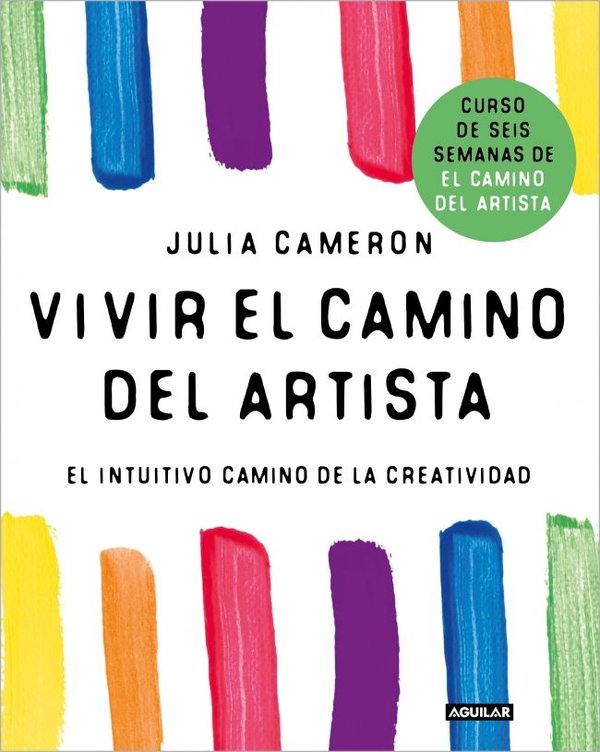
When a method is thirty-two years old, a question becomes inevitable: what do people who have been practicing it for decades do? In 2024, at the age of 76, Julia Cameron published the book that answered that question. It is titled Living the Artist's Way: An Intuitive Path to Greater Creativity. Six weeks, as has become customary lately, but with a different objective than any previous book of his: not to teach — to maintain. And add a new tool that Cameron had been using privately for years: the intuitive writing, a type of question-and-answer practice in writing that she considers the most advanced level of what the method can offer.
book summary
- Year: 2024. Cameron's last ledger before The Artist's Way Toolkit (2025).
- Structure: 6 weeks.
- Premise: It assumes that the reader already knows the base method. It doesn't teach it — it deepens it.
- New central tool: "guidance writing" — intuitive writing. Ask in writing, respond in writing from the quietest voice, dialogue with yourself in a structured way.
- Who is it for: veteran practitioners of the Artist's Way. Five, ten, fifteen years or more with the method.
The problem of the aging method
Cameron opens the book by acknowledging something that few personal development authors admit: When a practice has been with you for a long time, it loses some of its novelty — and with novelty, some of its apparent power.. The morning pages in year one are a discovery. In year ten they are routine. Routine is good — it's sustainability. But it is also the risk that the practice becomes mechanical and stops producing the insights it did at the beginning.
The answer Cameron proposes is not to change base practices. They are what they are for a reason. What he proposes is add an intentional layer of depth that keeps the work alive without abandoning what already works. That layer is intuitive writing, which is the central theme of the book.
Intuitive writing — what it is
Intuitive writing guidance writing in English — is a specific practice that Cameron describes in detail. It is done separately from the morning pages. Ten or fifteen minutes, usually in the afternoon. The mechanics: write a specific question at the top of a leaf. And then, without thinking, without censoring, the hand is allowed to write the answer for the next ten minutes.
The difference with the morning pages is important. Mornings are free flow without direction. Intuitive writing has direction — a question — but maintains a free-flowing quality to the answer. The effect is an internal dialogue structured by questions instead of rambling.
Cameron is explicit that this it's not spiritual automatism in the occult sense. You should not believe that "someone is dictating to you from beyond." The practice works for more mundane neurocognitive reasons: when a question is asked and permission is given to respond without a filter, answers emerge that the analytical mind was blocking. It is access to own material that was there but was not being accessed.
"You're not channeling anyone. You're channeling yourself — the part of you that's been waiting for you to ask something direct for years."
Julia Cameron · Living the Artist's Way · 2024The six weeks
Week 1 — Presence. Regain attention to the moment. Exercises in detailed observation of the environment.
Week 2 — Questions. Learn to ask good questions for intuitive writing. Most beginning readers ask questions that are too abstract ("what should I do with my life?"). The book trains you to ask more precise questions ("What small decision have I been putting off for two weeks and why?").
Week 3 — Flow. Listening to what emerges without judging or correcting it during writing.
Week 4 — Integration. How to bring what emerges into practical life without turning it into impulsive decisions or dismissing it as “just writing.”
Week 5 — Discernment. Learn to distinguish helpful responses from anxious ones. Not everything that emerges is wise. You have to calibrate.
Week 6 — Community. Share — in moderation, with discernment — some of the answers with trusted colleagues. Dialogue about dialogue deepens dialogue even further.
The book that closes his work
Although Cameron continues to write and will continue to publish, there is some closure in Living the Artist's Way. It is not the closure of the method — the method is alive in thousands of people and will survive it. It is the closure of architecture. With this book, Cameron's work already covers:
- The entry book: The Artist's Way (1992)
- The Jungian Deepening Book: The Vein of Gold (1996)
- The consolidation book: Walking in This World (2002)
- The Perseverance Book: Finding Water (2006)
- The second half book: It's Never Too Late to Begin Again (2016)
- The book of listening: The Listening Path (2021)
- The Writing Strategy Book: Write for Life (2023)
- The book of method maturity: Living the Artist's Way (2024)
Anyone who works through the eight books in the correct order, at a realistic pace, would have a complete training in applied creativity equivalent to a master's degree in creative development. The eight books are, together, the curriculum that Cameron has never called a curriculum but that, with the passage of time, is revealed to be the coherent work that it is.
Bilingual technical data sheet · Technical data
English edition
Publisher: St. Martin's Essentials
Year: 2024
Pages: 240
ISBN: 978-1250897077
Language: English
Spanish edition
Editorial: digital editions in Spanish
Year: 2024 (original); translation available in various editions.
Pages: 240 (approx.)
Spanish translation: available from multiple publishers.
Language: Castilian
Historical context · Historical context
Cameron posted Living the Artist's Way at 76 years old. The book is a closing of architecture — not a closing of a career. With it, Cameron's series covers the entire arc: from the beginning reader (The Artist's Way) to the decades-old practitioner (this book). The question it answers is: What do people who have been practicing the method for ten, twenty, thirty years do when the novelty is no longer novelty?
Intuitive writing · Guidance writing
The central tool that Cameron introduces — and that he had been practicing for years without having formally published it — is the intuitive writing (guidance writing). Ten or fifteen minutes, usually in the afternoon, apart from the morning pages. A specific question is written. And the hand is allowed to respond for ten minutes without thinking, without censoring.
The difference with the morning pages is important. Mornings are free flow without direction. Intuitive writing has direction — a question — but maintains a free-flowing quality to the answer. It's internal dialogue structured by questions instead of rambling.
Frequently Asked Questions · Frequently Asked Questions
Is it for beginners? / Is it for beginners?
No. Cameron writes it explicitly for veteran practitioners — five, ten, twenty or more years with the method. Beginners should start with the original The Artist's Way.
Is intuitive writing the same as automatic writing? / Is guidance writing the same as automatic writing?
No. Cameron clearly distinguishes: automatic writing (in the spiritualist sense) assumes external channeling. Intuitive writing is access to your own material that the analytical mind was blocking the way to. It is neurocognitive, not paranormal.
Does it help if I practice other forms of meditation? / Does it work if I practice other meditation?
Yes, it is compatible. Many readers combine intuitive writing with sitting meditation or yoga. The exercises are enhanced.
Is there a Spanish edition? / Spanish edition?
The Spanish edition is available in digital format. Because it is a recent book, the printed version in Latin America and Spain may be more limited.
How much time a day do you ask for? / How much time daily?
Morning pages (20 min) + intuitive writing (10-15 min, not daily — 3 times a week is enough) + weekly artist appointment + walk. Manageable.
Is Cameron going to write more books? / Is Cameron writing more books?
At 78 years old (in 2026) Cameron is still active. In 2025 he published The Artist's Way Toolkit. The following books will probably be about deepening or compilation, not about new methods.
Bilingual glossary · Bilingual glossary of key terms
| English | Spanish | Meaning |
|---|---|---|
| Living the practice | Live the practice | Book title. Integration of the method into long-term life. |
| Guidance writing | Intuitive writing / guide writing | Written dialogue with oneself structured by questions. |
| Intuitive path | intuitive path | Subtitle of the book. Emphasis on intuition as a guide. |
| Veteran practitioner | Veteran practitioner | Target audience: those who have been using the method for years. |
| Maintenance mode | Maintenance mode | The practice phase when it is no longer new but is still essential. |
| Deepening | Deepening | Go deeper into what is already practiced, do not add more new things. |
| Question formulation | Asking questions | Key Intuitive Writing Skill: Knowing what to ask. |
| Flow response | Response in flow | Write the response without a filter, like the morning pages but directed. |
| Integration | Integration | Bring what emerges into practical life without turning it into impulsiveness. |
| Discernment (advanced) | Advanced Discernment | Distinguishing helpful responses from anxious responses in intuitive practice. |
How to get the book · How to get the book
- Original English edition: Living the Artist's Way: An Intuitive Path to Greater Creativity. Available from Penguin Random House, Amazon, Apple Books, and Barnes & Noble. Also in independent bookstores and public libraries in the United States, United Kingdom, Canada and Australia.
- Spanish edition: Living the Artist's Path: An Intuitive Path to Greater Creativity. Search in general bookstores (Casa del Libro, FNAC, El Corte Inglés), on Amazon Spain/Latin America and in independent bookstores. Also available in digital format (Kindle, Kobo, Apple Books).
- Audiobook: Most of Julia Cameron's books have an audiobook version on Audible (English) and some editions on Storytel (Spanish).
- Libraries: Cameron's works are in most Spanish-speaking public libraries with a digital lending service (eBiblio in Spain, BiblioBoard in Latin America).
- Second hand: IberLibro, AbeBooks, Wallapop and eBay usually have used copies at better prices. For out-of-print books, it is sometimes the only way.
Take the complete Artist's Path course
Based on the original book by Julia Cameron. 12 structured weeks. Free. In Spanish.
Start the course