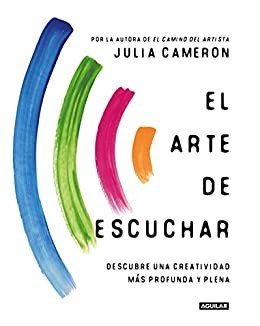
On January 12, 2021, with the world still in lockdown and the streets the quietest they had been in a century, Julia Cameron published an unexpected book. It was titled The Listening Path: The Creative Art of Attention. It was not a new installment of the Artist's Way. It did not promise unlocks. She proposed something rarer and more urgent: six weeks dedicated to the art — lost, according to her — of listening. Cameron was fascinated by a paradox of the pandemic: while the world stopped for the first time in decades, people were not taking advantage of the silence. I was filling it with new noise — podcasts, streaming, perpetual zoom, infinite scroll — so I wouldn't have to hear what the silence was about to tell them.
book summary
- Year: 2021. Published during the pandemic.
- Structure: 6 weeks (not 12).
- The six levels of listening: to the environment, to others, to oneself, to the echoes of the past, to the quietest voices (intuition, dreams), and to silence.
- Base tools: the three classic practices (morning pages, appointment with the artist, walk) + specific active listening exercises.
- Editorial context: is part of a shorter, more contemplative "new phase" for Cameron — along with Seeking Wisdom (2021) and subsequent books.
- Who is it for: people saturated with noise (mental or environmental) who feel that they have lost the ability to hear something important.
Week one — listening to your environment
Cameron starts with the most basic and, for that reason, the most forgotten: the sounds of the physical space you inhabit. The refrigerator humming. Traffic in the middle distance. The birds. The pipes. The breathing of someone sleeping next to you. Cameron proposes ten minutes a day dedicated just to this — sitting or walking, no music, no podcast, just consciously identifying what sounds are there.
The exercise seems trivial and it is not. Most of us have spent years filtering environmental sound as noise. That leaves us functionally deaf — we hear less than our ancestors. When you pay attention to your surroundings, you discover that each place has its own "sound signature." That the sounds change in the morning and at night. That your body relaxes differently depending on the sound environment. Silence does not exist — there is only listening.
Week two — listening to others
The second week addresses an uncomfortable truth: most of us We don't listen when others talk. We wait our turn. While the other speaks, we are already thinking about what we are going to respond, defend ourselves, contribute. That's not listening — it's waiting with open ears.
Cameron proposes a painful exercise. In three conversations this week, with three different people, completely give up preparing your answer. Listen in full until they finish. Take a second of silence afterwards. And only then respond. At first it is almost physically difficult. Many people experience anxiety when they no longer know what they are going to say. But when that impulse is overcome, the quality of the conversation changes radically. The other, truly heard sense, says things he wouldn't normally say. And the answers that end up coming out are tighter, more precise, more useful.
"When we are truly listened to, we say things we didn't know we were going to say. Listening is a creative act — believe in the other."
Julia Cameron · The Listening Path · 2021Week three — listening to you
The third week turns inward. Cameron proposes specific sessions — other than the morning pages — of written inner dialogue. Fifteen minutes a day in which you write a specific question and answer it from the quietest place within yourself.
Examples of questions: "What part of me have I been ignoring for weeks?", "What small decision have I been putting off for years?", "What would my self from ten years ago say to me if I saw how I live now?", "What do I need today that I'm not giving myself?" The secret of the exercise is in the pause before responding. You don't answer with the first thing that comes to mind. Wait. Sometimes twenty or thirty seconds. Let the answer emerge. And when it emerges, it's almost always an answer you didn't know you had inside.
Week four — listen to the echoes
By echoes Cameron understands the voices inherited from childhood. Parents, teachers, first loves, bosses, close friends. Each one left us phrases that are automatically reactivated in specific situations. "You're not good enough." "That's not a serious career." "Don't get your hopes up." These voices are not yours — they are echoes.
Week four is dedicated to identifying them. To name them with the origin: "this is my father's voice in 1987." "This is my fifth grade teacher's voice." When you name and date them, they lose power. They are no longer the truth. They are vocal memories. And vocal memories can be retired.
Week Five — Listen to the Silent Voices
The "silent voices" are intuition, dreams, hunches, hunches — all the unconscious stuff that most adults have learned to ignore. Cameron proposes a whole week of conscious respect for these signals. Write down your dreams every morning. Record the intuitions that appear during the day. Follow — even on a small scale — hunches about people, about decisions, about directions.
Cameron doesn't promise telepathy. It promises something more modest and more reliable: a measurable increase in decision quality when these signals are given voice rather than dismissed.
Week six — listen to the silence
The last level — and the most difficult for the modern adult — is listening silence itself. Not the environment. Not the voices. The silence. Cameron proposes daily periods of ten to twenty minutes in which you do absolutely nothing: you do not read, you do not write, you do not meditate formally, you do not contemplate the landscape with an artistic gaze. It's just being.
It is the oldest practice in the world and the most resisted. Almost all beginning practitioners describe the first few days as unbearable. Then something changes. The body learns. And something begins to appear that has no name in ordinary language — an unsolicited presence that, once known, explains why all the spiritual traditions of the world have put silence at the center of their practice.
Who is this book for?
If you feel saturated — with information, with opinions, with notifications, with conversations you don't remember — this book is a good antidote. It is not Cameron's book with the most creative tools. It is the book with the most capacity to empty. And sometimes what one needs to create is not more input — it's exactly the opposite.
Bilingual technical data sheet · Technical data
English edition
Publisher: St. Martin's Essentials
Year: 2021
Pages: 224
ISBN: 978-1250768568
Language: English
Spanish edition
Editorial: editions in Latin America and Spain
Year: 2021 (original); translation available in various editions.
Pages: 224 (approx.)
Spanish translation: available from multiple publishers.
Language: Castilian
Historical context: pandemic and silence · Historical context: pandemic and silence
Cameron submitted the manuscript of The Listening Path before the pandemic but the book was published in January 2021, in the midst of global confinement. By involuntary editorial coincidence, the book found itself in a time that needed it more than any other: a society that for the first time in decades had forced silence and that, instead of taking advantage of it, filled it with more noise — podcasts, streaming, perpetual zoom, infinite scroll.
Cameron recognized the coincidence. In 2021 interviews he said: "I could not foresee the pandemic, but the book is almost a manual for it. Having imposed silence without knowing how to listen is receiving a gift and not knowing how to open it".
The six weeks — deep breakdown · Deep breakdown of the six weeks
The book proposes six weeks, not twelve. Cameron recognizes that this change in architecture is intentional: listening is not trained with twelve weeks of exercises — it is trained with a few very intense weeks. The progressive levels are:
Week 1 · Listening to the environment · Listen to the environment
The sounds of physical space. The refrigerator, the pipes, the birds, the distant traffic, your own body breathing. Ten minutes a day of mindful attention to sounds that normally filter out as noise.
Week 2 · Listening to others · Listening to others
Give up preparing the answer while the other person speaks. Three conversations this week with three different people devoting all their attention — uncomfortably — to listening without planning a response.
Week 3 · Listening to oneself · Listening to you
Internal dialogue in writing. Fifteen minutes a day with a specific question and an answer from one's quietest place.
Week 4 · Listening to echoes · Listen to the echoes
The inherited voices: father, mother, teachers, first couples, bosses. Each one left phrases that are automatically reactivated. Identifying them with name and date takes away their power.
Week 5 · Listening to silent voices · Listen to silent voices
Intuition, dreams, hunches. Write down dreams every morning. Record intuitions during the day. Follow them on a small scale.
Week 6 · Listening to silence · Listen to silence
Daily periods of 10-20 minutes doing nothing. Do not read, do not write, do not meditate formally. Just be. The oldest practice in the world.
Frequently Asked Questions · Frequently Asked Questions
Why only six weeks instead of twelve? / Why only six weeks?
Cameron believes that listening is best trained in a few intense weeks. Twelve weeks would dilute the practice. Six is the sweet spot between depth and reasonable commitment.
Should we do morning pages too? / Do I also do morning pages?
Yes. The three base practices (morning pages, appointment with the artist, walk) continue to be the substrate. Listening adds to them, it does not replace them.
Is it suitable for introverts? / Does it work for introverts?
Yes — particularly good. Introverts already have listening skills. The book gives them structure to deepen it.
What if I have hearing loss? / What if I have hearing loss?
Cameron acknowledges that the book is adaptable. Listening exercises to the environment can be done with implants or hearing aids. inner listening exercises do not require physical hearing.
Is it a religious book? / Is it a religious book?
Not strictly. Week 5 is spiritually charged (silent voices, intuition) but does not require faith. Secular readers adapt it.
Is there a Spanish edition? / Spanish edition?
Yes, it circulates with the title The path of listening in some Latin American editions.
Bilingual glossary · Bilingual glossary of key terms
| English | Spanish | Meaning |
|---|---|---|
| Listening path | Way of listening | Book title and six-week method. |
| Environmental listening | Listening to the environment | Level 1: the sounds of physical space. |
| Interpersonal listening | Interpersonal listening | Level 2: Listen to others without preparing a response. |
| inner listening | inner listening | Level 3: written dialogue with oneself. |
| Echo listening | Listening to echoes | Level 4: Identify inherited voices. |
| Silent voices | silent voices | Level 5: intuition, dreams, hunches. |
| Listening to silence | listen to the silence | Level 6: contemplative practice. |
| Default mode network | Default neural network | Brain circuit that activates silent listening. |
| Attention economy | Attention economy | The cultural context that makes this book necessary. |
| deep listening | deep listening | Umbrella term for all six levels combined. |
How to get the book · How to get the book
- Original English edition: The Listening Path: The Creative Art of Attention. Available from Penguin Random House, Amazon, Apple Books, and Barnes & Noble. Also in independent bookstores and public libraries in the United States, United Kingdom, Canada and Australia.
- Spanish edition: The path of listening: the creative art of attention. Search in general bookstores (Casa del Libro, FNAC, El Corte Inglés), on Amazon Spain/Latin America and in independent bookstores. Also available in digital format (Kindle, Kobo, Apple Books).
- Audiobook: Most of Julia Cameron's books have an audiobook version on Audible (English) and some editions on Storytel (Spanish).
- Libraries: Cameron's works are in most Spanish-speaking public libraries with a digital lending service (eBiblio in Spain, BiblioBoard in Latin America).
- Second hand: IberLibro, AbeBooks, Wallapop and eBay usually have used copies at better prices. For out-of-print books, it is sometimes the only way.
Take the complete Artist's Path course
Based on the original book by Julia Cameron. 12 structured weeks. Free. In Spanish.
Start the course