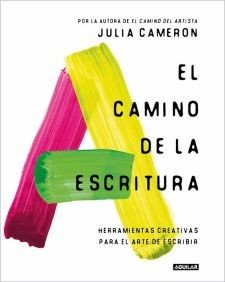
If you had to choose just one book about the craft of writing — just one — and you couldn't read another one for the rest of your life, The Right to Write Julia Cameron's would be a respectable candidate. It is not the most famous of the genre (that place is occupied On Writing by Stephen King or Bird by Bird by Anne Lamott). But among professional writers who have read several manuals, this is one of the titles that appears most frequently on the "best I've read" list. The reason is specific: Cameron doesn't teach you how to write better. teaches you to writeSimply put, when you've been thinking for years that you're not good enough.
book summary
- Year: 1998. Published between The Golden Vein y Walking in This World.
- Structure: 43 short chapters, each followed by a specific writing exercise.
- Central thesis: Writing is not a privilege for the "talented." It is a right — and a need — of all human beings. And the only requirement to be a writer is sit down to write.
- Who is it addressed to: not just professional writers. To anyone who has ever thought "I would like to write but I don't know if I have what it takes."
- The radical thing about the book: It is not about literary technique. It's about psychological permission to begin.
The thesis of the book
Cameron's thesis is devastating in its simplicity: At some point in the 20th century, writing stopped being a democratic act and became a professional act. For centuries, ordinary people wrote — letters, diaries, ledgers, family chronicles. Writing was a way of thinking. A way to remember. A way to accompany each other. It required no editor, no agent, no publication. It was part of being a literate adult.
But in the second half of the 20th century - Cameron argues - mass culture turned writing into career. Only those who publish "write." Only "writers" are those who sell books. It's only worth writing if you're "good." And that cultural transformation — deeply toxic — has convinced several generations of adults that their impulse to write is illegitimate if it does not translate into a marketable product.
Cameron proposes recovering the democratic version. Write how you sing: because you feel like it. No goal of publishing. Without comparison with famous writers. Without seeking professional validation. Write for the act itself. Write like an amateur pianist plays the piano on Sunday morning: without an audience, without criticism, without commercial aspiration. The value is in the act.
"You have the right to write. Not because you are good. Not because you have something important to say. Because you are human, because you are alive, and because you have fingers and a mind."
Julia Cameron · The Right to Write · 1998The structure: 43 short chapters
Unlike the great writing manuals, The Right to Write it does not advance thematically like a course. It progresses more like a series of short essays, each of five to ten pages, which can be read linearly or by picking. Each ends with a specific exercise — usually fifteen to thirty minutes — designed to immediately apply what the chapter proposes.
Some titles that give an idea of the scope: "Writing as Inhalation", "Writing is an Action", "Valor the Voice", "Drama the Day", "The Well", "Frame the Space", "Loyalty to Yourself", "Writing for Witness", "Writing Under Difficulty", "Frame the Question", "Sculpting", "Mood", "Containment".
There is no strict progression. They are, rather, forty-three short conversations with a teacher who has spent forty years writing. It can be read in any order you want — and many readers use it as an oracle: open a random page when it is blocked and read the chapter that falls on it.
The operating principles of the book
1. Writing is an act, not a result
Cameron insists on radically separating write de have written. Writing is the action. Having written is the product. The two things are not the same. You can write without producing anything that anyone sees — and you still write. You can "have written" a lot without actually writing — and this, in the long term, dries you up. What matters is the verb, not the participle.
2. Voice matters more than technique
Cameron gently criticizes manuals that focus everything on technique — structure, point of view, subplots, dialogue. Says: "technique without voice is dead literature". A writer with a strong voice and mediocre technique moves more than a writer with impeccable technique and a flat voice. And the voice is not acquired by study — it is acquired by written practice sustained, by trusting what one has to say.
3. Resistance is part of the job
Cameron describes with surgical precision something that every writer recognizes: the resistance that appears every morning at the writing table. Not lazy procrastination — the specific, almost physiological resistance that makes you suddenly want to answer emails, order books, do laundry. Cameron argues that this resistance does not disappear over the years. Even veteran published writers feel it every morning. The difference is not that they feel it less — it's that they have learned to sit despite it.
4. Writing is social, even if it seems lonely
Cameron has chapters dedicated to accomplices: reading friends, writing groups, "believing mirrors." The romantic image of the solitary writer is — according to Cameron — a half-truth. All serious writers have one or more trusted readers who support their process. Not to edit their text — to confirm that what they write deserves to be written.
5. Writing is medicine
This is the principle that the book defends most passionately. Cameron argues — with empirical evidence based on thousands of female students — that writing regularly, even without a literary goal, is therapeutically useful. Reduces anxiety. Clarifies decisions. Process losses. Untangles obsessions. It does not replace psychotherapy. But it complements it. And, in many cases, it is the only thing available when therapy is not available.
The exercises — how to take advantage of them
Each chapter of The Right to Write ends with an exercise. Some are free writing (write for 20 minutes about X). Others are specific (writing a scene from a chair's point of view). Others are meta (list 10 reasons why you don't write).
Cameron insists that the exercises be done in writing, not mentally. The difference is enormous. An exercise done in the head is a reflection. An exercise done on paper is a creative act. What you are looking for are the actions — not the reflections.
Who is this book for?
If you've ever thought, "I'd like to write but I don't know if it's worth it," this book was written for you. If you are a published writer with a career but are in a crisis of meaning, this book was also written for you — the chapters on "loyalty to yourself" and "writing under difficulty" are especially relevant to your phase.
If you are a student of creative writing and are looking for a detailed technical manual, The Right to Write It's not what you're looking for. We tell you without judgment — it is a legitimate choice to prefer technique. But this book is deliberately non-technical. It doesn't teach you to write better. It teaches you how to write, period.
And that difference — between writing better and writing — is, according to Cameron, the most important one for anyone who wants a writing life to understand.
Bilingual technical data sheet · Technical data
English edition
Publisher: Jeremy P. Tarcher/Putnam
Year: 1998
Pages: 256
ISBN: 978-1585420094
Language: English
Spanish edition
Editorial: Gaia Ediciones (Spanish edition), Aguilar
Year: 1998 (original); translation available in various editions.
Pages: 256 (approx.)
Spanish translation: available from multiple publishers.
Language: Castilian
Historical context · Historical context
Cameron wrote The Right to Write in 1997, between The Vein of Gold (1996) and the first prayer books of 1999. I was in New York and giving an increasing number of writing workshops at universities and arts centers. In those workshops I had observed a recurring pattern: brilliant women and men, with stories to tell, paralyzed by the idea that they were not "writer enough" to write. That permission block — distinct from the general creative block — became the theme of the book.
The narrative inspiration also came from two specific sources. First, from the American tradition of essai personnel — Montaigne, Emerson, Annie Dillard, Natalie Goldberg. Second, from his own twenty-five years of experience as a journalist, screenwriter and essayist. Cameron had written in almost every format possible. The book distills that experience into 43 short chapters.
The 43 chapters · The 43 chapters
Each chapter of the book is a short essay of between 3 and 8 pages, followed by a specific writing exercise. The titles give an idea of the range: Writing as Inhalation / Write as inhalation, Value the Voice / Value the voice, Drama the Day / Dramatize the day, The Well, Frame the Space / Frame the space, Loyalty to Yourself, Writing for Witness / Writing for the witness, Writing Under Difficulty / Writing in difficult conditions, Containment / Containment, Mood, Sculpting / Sculpt.
There is no strict narrative progression. It can be read in order or by clicking. Many readers use it as an oracle: open any page when they are blocked and read the chapter that falls on it.
Operating principles unpacked · Operating principles unpacked
1. Writing is an action, not a product · Writing is an action, not a product
The most important distinction of the book. Cameron radically separates to write (verb, present action) of to have written (participle, past product). Writing is the process. Having written is the result. The value is in the first. The second is byproduct.
This distinction has practical consequences. A person can write a lot without publishing anything and still have a full writing life. A person may have published a lot without writing regularly and be having an empty writing life. "The writer writes. That is all. Publication is consequence, not definition."
2. Voice trumps technique · Voice defeats technique
Cameron gently criticizes manuals that focus everything on literary technique. He argues that a writer with a strong voice and mediocre technique moves more than a writer with impeccable technique and a flat voice. And voice is not acquired by study — it is acquired by sustained writing practice and confidence in what one has to say.
3. Resistance is part of the craft · Resistance is part of the craft
Every writer recognizes the resistance that appears every morning before the page. Resistance does not disappear with experience. Cameron argues that even veteran writers feel it every day. The difference between amateurs and professionals is not that the professionals don't feel it — it's that they have learned to write despite her.
4. Writing is social, despite its solitude · Writing is social, despite its solitude
The romantic image of the isolated writer is partial. All serious writers have one or more trusted people who support their process — readers who read drafts, friends who listen to monologues, mentors who guide. The book has several chapters dedicated specifically to how to cultivate those relationships.
5. Writing is medicine · Writing is medicine
This principle is the one that the book defends most passionately. Writing regularly, even without literary ambition, is therapeutically useful. Reduces anxiety. Clarifies decisions. Process losses. Untangles obsessions. It does not replace psychotherapy but complements it. And in many cases it is the only thing available when therapy is not available.
Critical reception · Critical reception
The Right to Write has had a strange life. It was not a commercial success. The Artist's Way —its initial sales were modest. But over time it has become one of the books that more professional writers quote as influence. In informal surveys among workshop writers, it repeatedly appears in the top 5 most read books on writing.
Writers Digest includes it on his list of recommended books for beginning writers. Poets & Writers He has dedicated several articles to it. In Spain, writers like Rosa Montero and Almudena Grandes have mentioned it in interviews as a useful book to break the blockade. In Latin America, Samantha Schweblin he mentioned it in a 2019 interview as part of his reference library.
Frequently Asked Questions · Frequently Asked Questions
Is it a book for professional or amateur writers? / Is it for professional writers or amateurs?
For both of us, but especially for people who they want write and do not feel authorized. It's the book that turns 'someday I'll write' into 'tomorrow morning'. If you already publish regularly, parts of the book will sound basic to you; but the chapters on resistance, voice, and writing in difficulty continue to provide value at any level.
Can it be read in any order? / Can I read it in any order?
Yes. There is no rigid thematic progression. Cameron explicitly designed it as an 'open to any page' book. Many readers use it as an oracle: opening randomly when they are blocked.
How long does it take to read it? / How long does it take?
If you read it straight: two weeks at a reasonable pace. But the book recommends no read it like this. One chapter a day, with the exercise done, gives 43 days = about six weeks. That's the full experience.
Is it just for writing fiction? / Is it only for fiction?
No. The book is suitable for any form of writing: fiction, essay, memoirs, personal diary, blogging, screenwriting, journalism. The principles are the same.
Is there a Spanish edition? / Is there a Spanish edition?
Yes, published by Gaia Ediciones as The right to write. Available in Spain and Latin America in various editions. There is also an audiobook edition.
Is this book better than On Writing by Stephen King? / Is it better than On Writing by Stephen King?
They are books with different objectives. King is about the technical craft of the professional writer. Cameron is about psychological permission to write. They are complementary — reading both is useful. For someone paralyzed before starting, Cameron is the book; For someone already writing, King brings more technique.
Do you have to do the morning pages at the same time? / Do I need to be doing morning pages?
Cameron assumes it but does not demand it. Many readers come to this book without having read The Artist's Way. It works as a stand-alone book, although those who do morning pages get more out of it.
What are the three best chapters? / What are the three best chapters?
Subjective, but for most readers: 'Writing as Inhalation', 'Loyalty to Yourself' and 'Writing Under Difficulty'. Those three, read together, capture the essence of the book.
Can it be read on mobile? / Can I read it on a phone?
Yes, there is a Kindle edition. But the book is designed for paper — the short chapters invite you to annotate, underline, mark. Many readers who started on Kindle end up buying the physical edition.
Bilingual glossary · Bilingual glossary of key terms
| English | Spanish | Meaning |
|---|---|---|
| The right to write | The right to write | Central thesis: writing is a universal right, not a privilege of the talented. |
| Writing as action | Write as action | Distinction between the verb 'write' (value) and the participle 'have written' (by-product). |
| Voice | Voice | The writer's personal signature. It is acquired by practice, not by study. |
| Resistance | Endurance | The strength that appears every day before sitting down to write. It is managed, not eliminated. |
| Writing medicine | Medicine writing | Regular writing as a complementary therapeutic tool. |
| Believing mirrors | believing mirrors | Trusted readers who confirm that it is worth continuing. |
| Writing for witness | Write for the witness | Write not to publish but so that someone (real or imagined) receives. |
| Writing under difficulty | Writing in difficulty | Write precisely when conditions are not ideal. |
| The well | The well | The inner source of history. It is replenished with observation and rest. |
| Containment | Containment | Know when to silence something that is being written so that it does not lose strength. |
How to get the book · How to get the book
- Original English edition: The Right to Write: An Invitation and Initiation into the Writing Life. Available from Penguin Random House, Amazon, Apple Books, and Barnes & Noble. Also in independent bookstores and public libraries in the United States, United Kingdom, Canada and Australia.
- Spanish edition: The right to write: an invitation and initiation to the life of a writer. Search in general bookstores (Casa del Libro, FNAC, El Corte Inglés), on Amazon Spain/Latin America and in independent bookstores. Also available in digital format (Kindle, Kobo, Apple Books).
- Audiobook: Most of Julia Cameron's books have an audiobook version on Audible (English) and some editions on Storytel (Spanish).
- Libraries: Cameron's works are in most Spanish-speaking public libraries with a digital lending service (eBiblio in Spain, BiblioBoard in Latin America).
- Second hand: IberLibro, AbeBooks, Wallapop and eBay usually have used copies at better prices. For out-of-print books, it is sometimes the only way.
Take the complete Artist's Path course
Based on the original book by Julia Cameron. 12 structured weeks. Free. In Spanish.
Start the course